What to Do in La Paz, Capital of Bolivie
The world's highest capital, La Paz is an extraordinary city brimming with life and color. Perched at over 3,600 meters of altitude,
The world's highest capital, La Paz is an extraordinary city brimming with life and color. Perched at over 3,600 meters of altitude, this metropolis has a unique character with its cable car system and mountains as a backdrop. You can visit La Paz in passing between two treks or stop for a week to soak in the charming tumult of local life. In any case, here are some places and activities not to miss during a stay in La Paz :

Traverse the City by Cable Car
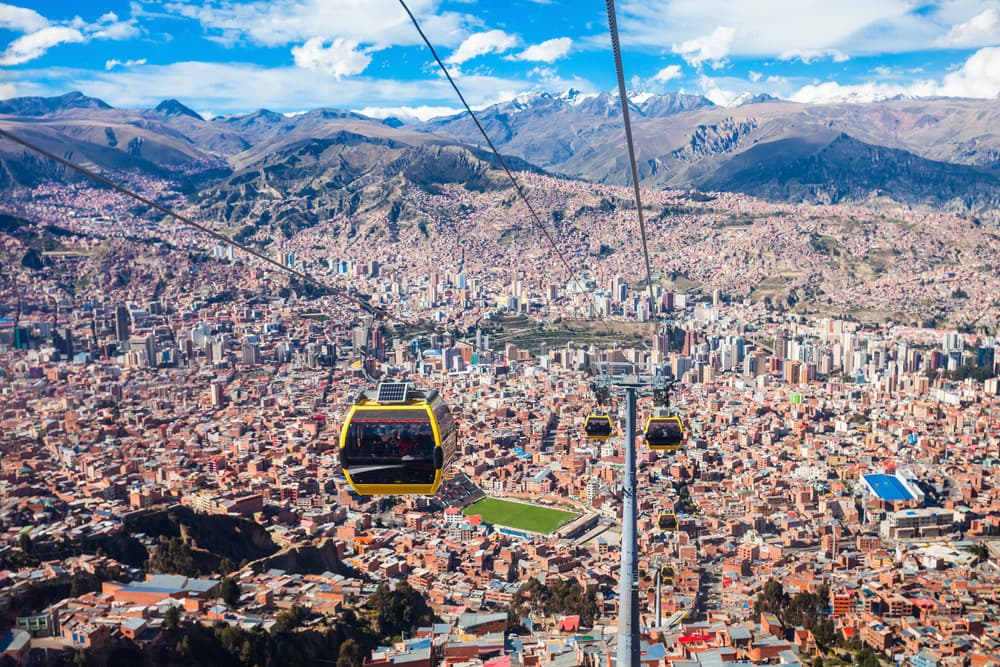
With its extraordinary geographical location and breathtaking landscapes, La Paz is unlike any other capital. Here, the cable car replaces the metro: it's an entirely ordinary way to get around the city. Take advantage of your stay to gain altitude and admire the views from the cable car: you'll see the giant snow-capped mountains surrounding La Paz, the red-tiled roofs of houses, markets, cemeteries, places of life and contrasts… It's the best way to discover La Paz at a glance and in a completely unique way, as long as you don't have a fear of heights, of course.

Visit the Witches' Market
The Mercado de las Brujas, or witches' market, is a truly disorienting place in La Paz. Originally, this market sold only products intended for Aymara rituals, but now it offers many souvenirs. The colorful Brujas market displays numerous traditional remedies, amulets, lucky charms, as well as local crafts: it's therefore the perfect place to find gifts to bring home.

Journey Through History on Calle Jaén
Calle Jaén is one of the most famous streets in La Paz: the heart of colonial Bolivie, it has retained its charm and colors of yesteryear. It's a lovely contrast with La Paz's skyscrapers and moreover, you'll even find suspended lampposts there. If that's not enough to satisfy your historical curiosity, you can continue your visit by taking advantage of one of the five museums located on this street, with very diverse themes. Notably, you'll find the musical instruments museum, a perfect place to discover local culture.

Climb to the Killi Killi Viewpoint
This viewpoint located in the heights of La Paz offers a magnificent panorama over the Bolivian capital. A breathtaking view, literally, as getting there isn't easy. But it's perfect practice for acclimatization before heading out on a trek in the Royal Cordillera, so don't miss the chance to see La Paz from a different perspective.

Enjoy the Nightlife
In the evening and especially on weekends, La Paz comes alive with music and dancing. It's an opportunity to discover Bolivian joie de vivre and the traditions that make this people proud. Many restaurants or "peñas" offer concerts with often varied lineups, blending modern stage performances and Andean music. You'll enjoy the natural sounds of local instruments and especially the famous flutes, and learn a few dance steps. Otherwise, you can reserve your evening to attend a Cholitas show, women in traditional outfits who practice wrestling.

Meet the Shoe Shiners
An ordinary activity, you might think. But getting your shoes shined in La Paz is a way to understand local life. Because you'll quickly notice while walking through the streets of the capital: many shoe shiners walk from one neighborhood to another looking for clients, hoping to bring home some coins for their families. And La Paz's shoe shiners have a characteristic known worldwide: they work entirely masked. Some say it's to protect themselves from gases and pollution, but most admit it's to maintain their anonymity and dignity, because in Bolivie, this work is highly frowned upon. You can also ask a shoe shiner to guide you through the city or one of its neighborhoods: it's a truly unique way to visit La Paz.

Visit a Museum
La Paz has numerous museums that allow you to better understand Bolivie in just a few hours. Some display contemporary art while others highlight the country's cultural diversity; some are dedicated to geology and mining while others trace the nation's history. You'll have plenty of choice as to which museums to visit, but if you don't have much time during your visit to La Paz, take a tour of the archaeology museum or the ethnographic museum. The first displays thousands of objects from ancient Bolivian civilizations, including the Tiwanakus and Incas. As for the latter, it showcases the craftsmanship and clothing of the different ethnic groups living in Bolivie.

Test Your Limits
La Paz is also a city of extremes, and certain activities will confirm this for you. If you love extreme sports and adrenaline-pumping activities, nothing beats an outing in La Paz with the Urban Rush group: they offer to rappel down a 17-story building in the heart of the Bolivian capital! Attached to a rope, you'll throw yourself into the void to gradually and safely descend to the ground.

Ride the Death Road
Starting from La Paz, the Death Road is one of the most popular activities in Bolivie. By mountain bike, you can tear down the 64 km descent and 3,600 m elevation change that separates La Paz from the end of this narrow and splendid mountain road. Rest assured, it's practically no longer used by vehicles since a new paved and safer road was built.
Frequently asked questions
La Paz is perched at over 3,600 meters of altitude, making it one of the world's highest capitals. It's advisable to plan acclimatization time upon arrival to avoid altitude sickness (soroche).
Two to three days are sufficient to discover La Paz's must-sees (cable car, witches' market, Calle Jaén, Killi Killi viewpoint). Plan a week if you want to immerse yourself in local life and make excursions to the surrounding areas.
The Death Road is a legendary mountain bike descent of 64 km and 3,600 m elevation change starting from La Paz. Once one of the world's most dangerous roads for vehicles, it's now reserved for cyclists since a new paved road was built.
The Mercado de las Brujas (witches' market) is located in La Paz's historic center. You'll find traditional remedies, amulets and local crafts used in Aymara rituals, as well as many souvenirs.
The most original and practical means of transportation in La Paz is the cable car, which connects different neighborhoods of the city from the heights. Minibuses (micros) and taxis complete the local transportation offer.
Cholitas are Bolivian women in traditional Andean clothing. In La Paz, you can attend cholitas wrestling shows, a local tradition blending culture, humor and athletic performance, very popular with tourists and locals alike.