Casa de la Moneda de Potosí
Casa de la Moneda de Potosí
Once the colonial mint of Potosí, Casa de la Moneda preserves 18th-century rollers, Andean paintings, and coin collections. An essential museum for understanding Bolivia's mining and monetary heritage.
Casa de la Moneda de Potosí is one of the largest colonial buildings in South America. Built in the 18th century to strike silver coins extracted from Cerro Rico, it powered the Spanish Empire's economy for centuries. Today a national museum, it houses coin-striking machinery, colonial art collections, and archives that tell the story of Bolivia's mining and monetary history.
Practical information at a glance
- Admission: paid entry (reduced rate for Bolivian nationals)
- Visit: guided tour mandatory; guides available in Spanish and English
- Recommended duration: 2 to 3 hours
- Closure: closed Mondays
- Dress code: no specific dress restrictions
What to see
The building is organized around several interior courtyards. The rooms display colonial-era rollers and coin-striking presses, some still in partial working order. A colonial painting gallery houses religious works and portraits of viceroys. The museum also features collections of coins, minerals, and objects linked to the exploitation of Cerro Rico.
The Bacchus mask — a grimacing polychrome wooden figure suspended on the facade — is one of Potosí's most photographed symbols. Its exact origins remain debated among historians.
History and context
The first Casa de la Moneda was founded in Potosí in 1572 under Viceroy Francisco de Toledo. The current, more expansive building was constructed between 1759 and 1773 after plans by architect Salvador de Villa. At its height, Potosí was one of the world's largest cities thanks to silver from Cerro Rico.
The coin struck here — the real de a ocho — circulated as far as Europe and Asia. After Bolivian independence (1825), the Casa de la Moneda continued operating into the early 20th century before being transformed into a museum.
Highlights of your visit
The colonial rollers
These massive wooden machines, once powered by mules, were used to flatten silver bars into sheets. Their size and state of preservation are remarkable for 18th-century equipment.
The colonial painting gallery
Dozens of canvases illustrate Andean painting traditions, blending Catholic iconography with indigenous elements. Some works depict the Virgin of Cerro, a syncretic figure unique to Potosí.
The coin room
Coins struck in Potosí from the 16th to 19th centuries are on display, allowing you to trace the evolution of minting techniques and the symbols engraved on each piece.
Photography tips
Natural light filters through the interior courtyards: mornings offer softer lighting on the stone facades. Indoors, luminosity is dim in some rooms — a camera with strong low-light performance is useful. Photographing the rollers from the upper galleries provides good perspective on their scale.
Location and access
Casa de la Moneda sits on Plaza 10 de Noviembre, in the heart of Potosí's historic center, a few minutes' walk from the cathedral and main square. Potosí is accessible from Sucre by road (about 3 hours) or from La Paz (about 10 hours). The historic center is walkable; no special transport is needed to reach the museum from the central plaza.
Nearby attractions
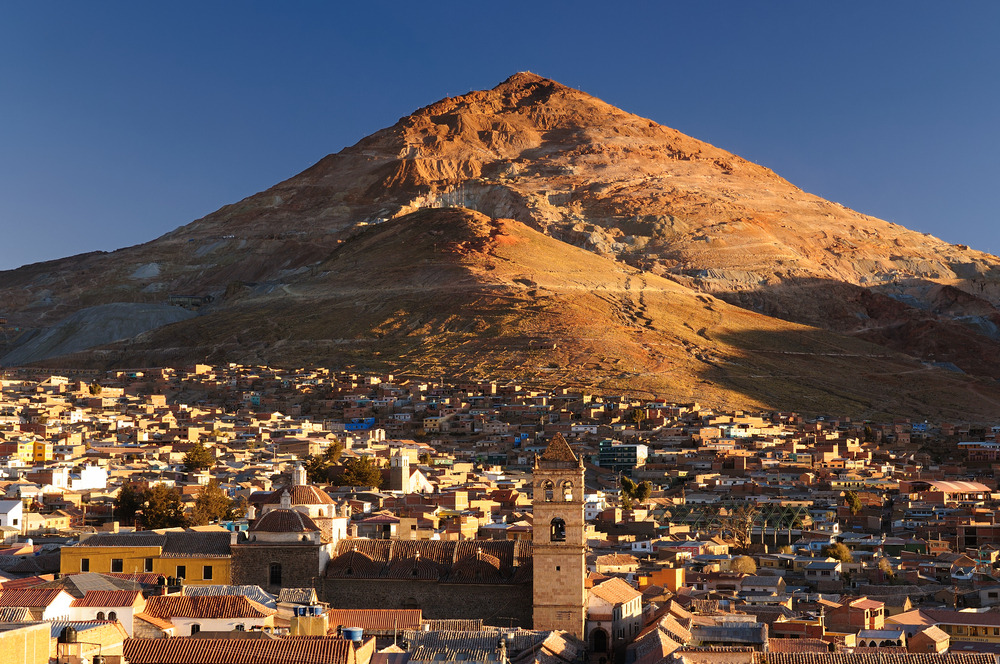
- Cerro Rico — the mountain whose silver financed the Spanish Empire; active mine tours depart from Potosí.
- Potosí Cathedral — 17th-century Baroque edifice on the main plaza, steps from the museum.
- Potosí Craft Market — textiles and silver objects crafted using traditional techniques.
Frequently asked questions
The visit is mandatory guided. Guides in Spanish and English are available on-site. It is not possible to tour the museum alone.
Casa de la Moneda is closed on Mondays. Plan your visit accordingly if you're spending limited time in Potosí.
Plan for 2 to 3 hours to tour all the rooms with a guide. Those with a passion for colonial art or monetary history may wish to spend more time.
Yes. The two sites complement each other well: Casa de la Moneda explains the processing and striking of silver, while touring Cerro Rico mines shows the extraction process. Plan a full day for both.
Photography is generally allowed in the courtyards and some rooms. Certain areas, notably the painting gallery, may have restrictions. Check with your guide at the start of your visit.
The dry season (May to October) is most favorable: clear skies and stable temperatures. Potosí sits above 4,000 meters elevation; bring warm clothing regardless of season.
Interested in this visit?
We can include it in your personalised itinerary.