Luribay
Luribay is a Bolivian colonial village nestled in a temperate valley in Loayza Province. Vineyards, a colonial church and spectacular gorge landscapes make it an authentic stop far from the beaten path.
Luribay is a small Bolivian town in Loayza Province, in the department of La Paz. Perched in an inter-Andean valley at around 2,000 meters altitude, it benefits from a warm, dry microclimate that contrasts sharply with the neighboring altiplano. The region is known for its vineyards and orchards, as well as its colonial church that overlooks the central plaza. It is an authentic stop, far from conventional tourist circuits.
What to See
The village is organized around a main plaza lined with trees and a colonial church of stone and adobe. The surroundings offer landscapes of deep valleys, agricultural terraces and vineyards. Local production of wine and singani (Bolivian grape brandy) constitutes the principal economic activity and can be observed during harvest season.
History and Context
Luribay was founded during the Spanish colonial period. Its location in a temperate valley quickly made it a center of agricultural production, particularly viticulture, a tradition dating back to the 17th century. The parish church, built in Andean colonial style, bears witness to this period of missionary settlement in Bolivian valleys.
Highlights of Your Visit
The Colonial Church
Luribay's church, built of adobe and stone, features a sober façade characteristic of colonial architecture in Andean valleys. The interior preserves ancient decorative elements. The visit is brief but offers a concrete insight into local colonial heritage.
Vineyards and Orchards
The valley produces grapes, peaches and figs in a landscape of terraces. During harvest season, it is possible to observe traditional agricultural work. The singani produced in the region is a recognized Bolivian national specialty.
Valley Landscapes
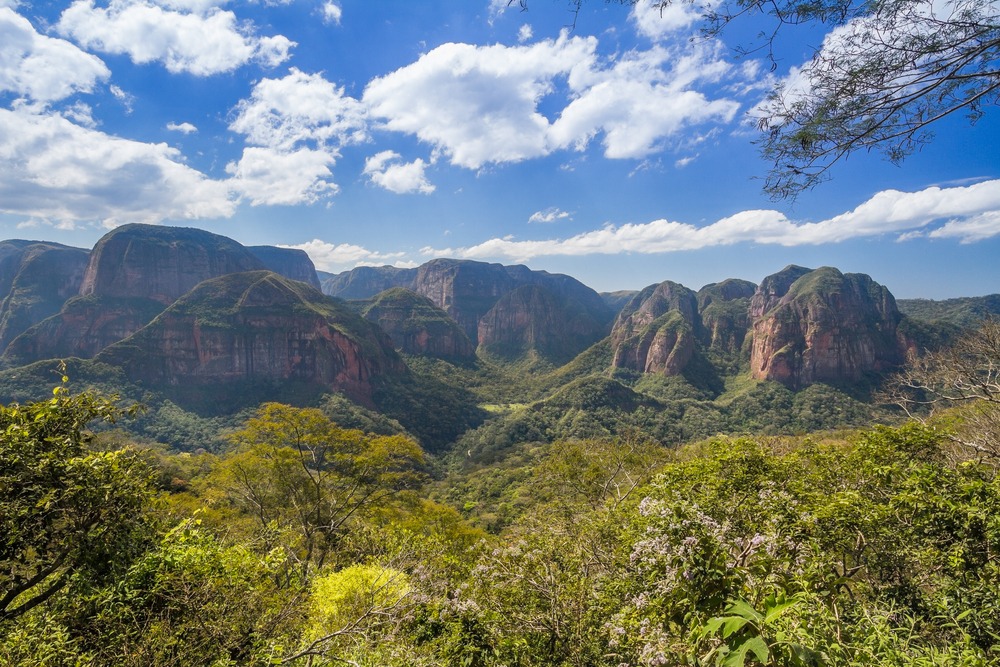
The surroundings offer hiking through gorges and infrequently visited valleys. The semi-arid vegetation, ochre cliffs and intense valley light create a striking photographic setting, very different from the altiplano.
Photography Tips
Morning light is ideal for photographing the church and central plaza before crowds gather. Agricultural terraces and vineyards photograph well in late afternoon, when raking light emphasizes the relief. No known photography restrictions in public spaces.
Location and Access
Luribay is located in Loayza Province, La Paz Department. The road from La Paz is long and partially unpaved; travel by four-wheel-drive vehicle is recommended. Minibuses depart from La Paz to Luribay, but frequencies and schedules vary by season—inquire locally before departing. The village is accessible by private car or public transportation from the Bolivian capital.
Nearby Attractions
- La Paz — Bolivia's capital, the logical starting point for reaching Luribay, featuring markets, urban cable cars and historic neighborhoods.
- Valle de las Ánimas — a valley with spectacular rock formations, on the route between La Paz and the southern valleys.
Frequently asked questions
The dry season (May to October) is most favorable: roads are passable and skies are clear. The rainy season (November to April) can make unpaved roads difficult to access.
Shared minibuses depart from La Paz to Luribay. The road is long and partially unpaved; a 4x4 vehicle is recommended for greater comfort and safety.
Lodging options are very limited in this small village. It is advisable to inquire with a local agency before planning an overnight stay.
The region produces singani and artisanal wines. It is sometimes possible to purchase directly from local producers, particularly during harvest season.
As in any Bolivian church, respectful dress is appropriate. Avoid very short shorts and overly light clothing out of respect for the place of worship.
Want to discover this destination?
Our local advisors design your tailor-made trip.