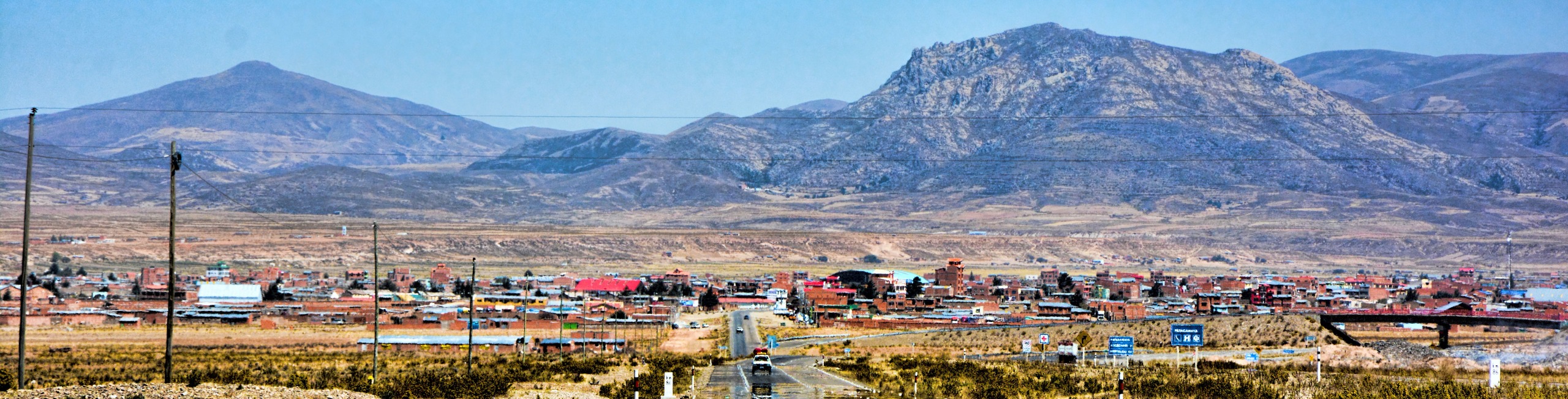
San Pedro de Atacama
An Andean village at 2,400 m altitude in northern Chile, San Pedro de Atacama is the gateway to the Atacama Desert: geysers, salt flats, flamingo lagoons and lunar valleys within easy reach by excursion.
San Pedro de Atacama is an Andean village in northern Chile — not Bolivia — perched at approximately 2,400 meters altitude in the Atacama Desert. A crossroads between volcanoes, geysers, salt lagoons and pre-Columbian remains, it serves as a base for exploring one of the planet's most arid deserts. Its adobe-lined streets, artisanal market and Atacameño population give it a distinctive identity, far removed from mere tourist transit.
Practical Information at a Glance
- Altitude: approximately 2,400 m — allow time for acclimatization upon arrival.
- Access: El Loa International Airport in Calama (approximately 100 km away); regular shuttles and buses between Calama and San Pedro.
- Currency: Chilean peso (CLP); ATMs are limited, bring cash.
- Clothing: warm days, very cold nights — layering is essential.
- Recommended duration: 3 to 5 days to cover the main surrounding sites.
- Accessibility: the village is partially accessible; natural sites (geysers, valleys) are often difficult to access by wheelchair.
What to See
The village itself is compact: a shaded plaza de armas, the colonial San Pedro church (17th century), the Museo Arqueológico Gustavo Le Paige and its collections of Atacameño mummies and ceramics. Around it, the landscape changes dramatically depending on direction: salt, volcanoes, dunes or colored lagoons.
History and Context
Inhabited for millennia by the Atacameño people (Lickanantay), San Pedro was a commercial hub on routes linking the Altiplano, the Pacific and Andean cultures. The Incas incorporated it into their empire in the 15th century. The Spanish founded a mission there in the 17th century, whose church remains a direct heir to that legacy. Belgian Jesuit Gustavo Le Paige conducted major archaeological excavations there in the 20th century.
Highlights of a Visit
Valle de la Luna
Just a few kilometers to the west, this valley carved by erosion in salt and clay offers stunning lunar formations. The sunset here is particularly spectacular, with ochre and purple hues across the salt ridges.
Tatio Geysers
Approximately 90 km to the north, at over 4,300 m altitude, this geothermal field is one of the most active in the southern hemisphere. Geysers are at their peak at dawn, when vapor contrasts with intense cold. Excursions depart early in the morning from San Pedro.
Miscanti and Miñiques Lagoons
These two high-altitude lagoons, framed by volcanoes, are home to pink flamingos and puna vegetation. Located in the Los Flamencos national reserve, they can be visited by excursion from San Pedro.
Atacama Salt Flat
Chile's largest salt flat stretches south of the village. The Chaxa lagoon at its heart hosts three flamingo species. The cracked salt surface and water reflections create landscapes of rare geometry.
Museo Arqueológico Gustavo Le Paige
This museum, affiliated with the Catholic University of the North, preserves thousands of Atacameño objects: ceramics, textiles, mummies. It's the best introduction to the region's pre-Columbian history before venturing into the field.
Photography Tips
Desert light is harsh at midday. Prioritize golden hour (sunrise and sunset) for Valle de la Luna and the salt flat. For Tatio geysers, arrive at dawn: vapor is dense and the sky still dark. A polarizing filter reduces reflections on salt lagoons. At night, the lack of light pollution around San Pedro makes it a recognized astronomy site.
Location and Access
San Pedro de Atacama is located in the Antofagasta region, in northern Chile, on the border with Bolivia and Argentina. The nearest airport is Calama (El Loa), served from Santiago and other Chilean cities. Private shuttles and buses connect Calama to San Pedro. From Bolivia, the route passes through the Hito Cajón border post (Uyuni – San Pedro), accessible by 4x4 with an agency.
The village is walkable on foot. Surrounding sites are visited by organized excursion or in a 4x4 vehicle rented locally.
Nearby Attractions
- Valle de la Luna — salt and clay valley with spectacular geological formations, ideal at sunset.
- Tatio Geysers — high-altitude geothermal field best visited at dawn to see vapor columns.
- Atacama Salt Flat — vast expanse of salt hosting pink flamingos and colored lagoons.
- Miscanti and Miñiques Lagoons — high-altitude lagoons in the Los Flamencos reserve, framed by volcanoes.
- Valle de la Muerte — red sand dunes and rock formations, starting point for sandboarding.
Frequently asked questions
The Atacama Desert is visitable year-round. Southern winter (June-August) offers perfectly clear skies but very cold nights. Summer (December-February) corresponds to the "Bolivian winter": high-altitude rains can close some tracks. Southern spring and fall (September-November, March-May) are often the most balanced.
San Pedro is at approximately 2,400 m, which is manageable for most travelers. However, Tatio geysers exceed 4,300 m. Plan at least one night in San Pedro before ascending to altitude, stay well hydrated and avoid alcohol for the first few days.
Yes, it's a classic itinerary. Agencies offer 3-day 4x4 crossings between Uyuni and San Pedro (or vice versa), via Bolivian colored lagoons and the Hito Cajón border post. Check track conditions according to season.
Photography rules at the Museo Gustavo Le Paige may vary. Check directly at the entrance; certain rooms, particularly those exhibiting human remains, may have restrictions.
During high season (July-August, year-end holidays), excursions to the geysers and Valle de la Luna often sell out. Booking a few days ahead with a local agency or through your travel agent is recommended.
San Pedro de Atacama is in Chile, in the Antofagasta region. It is close to the Bolivian border, which explains the frequent confusion, particularly for combined itineraries with the Salar de Uyuni.
Want to discover this destination?
Our local advisors design your tailor-made trip.