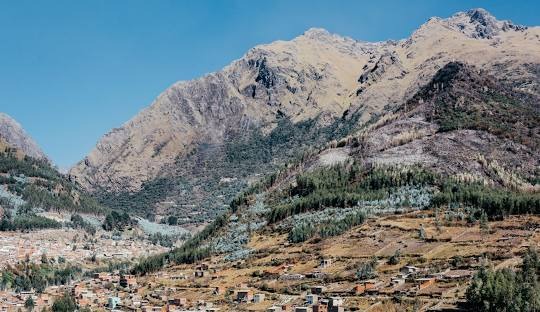
Tuni (4450m)
At 4,450 m in Bolivia's Cordillera Real, Tuni is a glacial lake and Aymara village that serves as a base for treks toward Condoriri and Huayna Potosí.
Tuni is an Andean village perched at approximately 4,450 m elevation in Bolivia's Cordillera Real, northwest of La Paz. It serves as a classic starting point for trekkers heading toward the glaciers and snow-capped peaks of the region, notably Huayna Potosí. The Tuni lagoon, framed by mountains, forms the heart of the site: a high-altitude reservoir that supplies drinking water to the city of La Paz.
Practical information at a glance
- Elevation: approximately 4,450 m — prior acclimatization is essential.
- Access: road from La Paz (approximately 2 hours by 4×4 vehicle or local transport via Milluni); the track is partly paved, then unpaved.
- Recommended duration: half a day for the lagoon alone; 2 to 5 days for a full trek toward Huayna Potosí or the Tuni–Condoriri crossing.
- Clothing: mountain equipment is mandatory — thermal layers, waterproof jacket, hat, gloves, hiking boots.
- Entry: access to the lagoon area is subject to an entrance fee managed by the local community (verify rates on site).
What to see
The Tuni lagoon stretches at the foot of glaciated peaks. On clear days, the reflections of eternal snow on the calm waters are striking. The village itself is modest: a few adobe dwellings, free-roaming alpacas, and an end-of-the-world atmosphere. Puna vegetation—ichu grass, queñua trees—covers the surrounding slopes.
History and context
The Tuni lagoon is a natural reservoir developed to supply drinking water to La Paz. The local Aymara community manages access to the site and collects entrance fees, a form of community tourism that directly supports the village economy. The area is part of the buffer zone of Huascarán National Park — not to be confused with Bolivia's Cordillera Real, which has no unified national park status.
Highlights of the visit
The lagoon and its reflections
In the morning, before wind ripples the surface, the lagoon offers a perfect mirror of the glaciers. This is the ideal moment to pause at the water's edge before continuing toward high-altitude refuges.
Starting point for the Tuni–Condoriri trek
The Tuni–Condoriri circuit is one of the most renowned treks in the Cordillera Real. It connects Tuni to the Condoriri massif over several days, crossing glacial lakes and passes over 5,000 m. Agencies in La Paz organize this circuit with local muleteers and guides.
Base for ascending Huayna Potosí
Tuni provides an alternative approach to the Huayna Potosí base camp (6,088 m), one of Bolivia's most technically accessible peaks for guided beginner alpinists.
Photography tips
Morning light (between 7 a.m. and 9 a.m.) is most favorable: the low sun illuminates the glaciers without overexposing the sky. Position yourself at the lagoon's edge to capture reflections. In overcast weather, the tones of the puna—ochre, pale green, slate gray—offer a subtle yet powerful palette. Avoid midday, which is often windy and cloudy.
Location and access
Tuni is located approximately 60 km northwest of La Paz, accessible via the Milluni road and then an unpaved track. A 4×4 vehicle is recommended, especially during the rainy season (November to March). No regular public transport serves the village directly; trekking agencies in La Paz arrange transfers. The elevation requires acclimatization of at least two days in La Paz before any hiking.
Nearby
- Huayna Potosí — glacial peak at 6,088 m, one of the world's most accessible "6,000 m" summits with a guide.
- Condoriri Lake — glacial lake at the foot of the Condoriri massif, terminus of the namesake trek.
- La Paz — Bolivia's administrative capital, essential logistics hub before any mountain expedition.
- Milluni — mining village on the road to Tuni, with its own high-altitude reservoir.
Frequently asked questions
The dry season (May to October) is ideal: clear skies, passable trails, reduced weather risks. Avoid the rainy season (November to March) when unpaved tracks become difficult and visibility of glaciers is poor.
No. The Tuni lagoon is accessible to any well-acclimatized hiker. However, ascents toward Huayna Potosí or the passes on the Condoriri trek require good fitness and, for glaciated peaks, a certified guide.
The most practical solution is to work with a trekking agency in La Paz that arranges 4×4 transport. There is no direct bus line to the village.
Camping is possible around the lagoon. Some agencies have a basic refuge on site. Plan for equipment suited to nights above 4,400 m, where temperatures often drop below freezing.
Yes. At 4,450 m, acute mountain sickness can affect even healthy people. Spend at least two nights in La Paz (3,600 m) before heading to Tuni, drink plenty of water, and ascend gradually.
Want to discover this destination?
Our local advisors design your tailor-made trip.