Cascadas de Cuevas Park
Cascadas de Cuevas Park
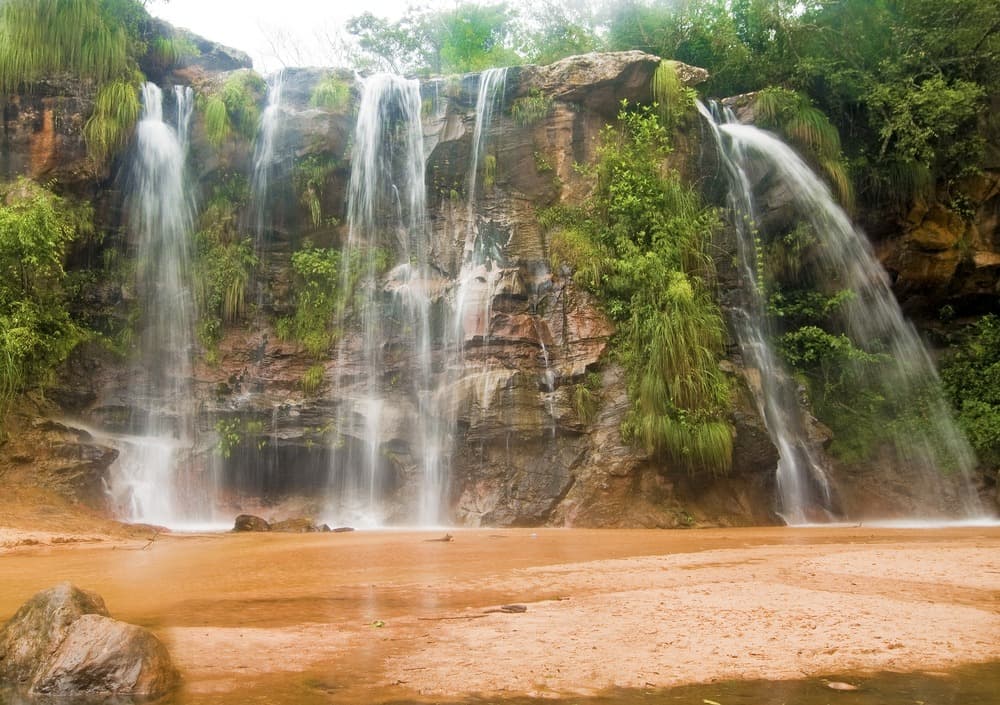
Located 20 km from Samaipata, Cascadas de Cuevas features three waterfalls and natural pools for swimming in a subtropical setting, at the edge of Amboró National Park.
The Cascadas de Cuevas consist of three waterfalls located approximately 20 km from Samaipata, in the Santa Cruz department. The site, still relatively undiscovered by international travelers, combines waterfalls of modest heights, natural pools suited for swimming, and dense subtropical vegetation, on the fringes of Amboró National Park.
Why visit Cascadas de Cuevas
The appeal of the site lies in the rare combination of three accessible waterfalls on the same trail, fed by a stream that descends from the Andean foothills toward the eastern plains. Each waterfall forms a shallow lagoon at its base, making swimming possible under more accessible conditions than at many other Bolivian waterfall sites.
The immediate setting — humid forest, rocky cliffs, bird fauna — offers a striking contrast to the dry landscape of Samaipata, situated at altitude. A visit fits naturally into a stay in Samaipata, where it makes for a half-day excursion.
What you will see on site
Three cascading waterfalls
The trail follows the stream and allows you to access the three waterfalls successively. The heights vary but remain moderate; the real appeal lies mainly in the pools formed at the base. Trails and walkways connect the different levels.
Swimming in the lagoons
The shallow bodies of water that form at the foot of the falls are suitable for swimming. The water temperature remains cool year-round. Bring a swimsuit, towel, and shoes suited to wet rocks.
Fauna and vegetation
The site lies in an ecological transition zone between the Andes and the Amazon. You will observe dense tropical vegetation (ferns, vines, palms), as well as numerous bird species, particularly early in the morning.
Practical information
- Duration of visit: allow 2 to 4 hours on site depending on your pace and time spent swimming.
- Admission: modest entrance fee collected upon arrival, payable in Bolivianos.
- Equipment: closed waterproof hiking shoes, swimsuit, towel, water, snacks, insect repellent, sun protection.
- Difficulty level: short and accessible trails, but slippery after rain. Be cautious on rocks near the pools.
- Amenities: basic infrastructure (restrooms, picnic areas). No food service on site — bring something to eat.
When to go
The dry season (May to October) offers the most comfortable conditions: passable trails, clear water, easy road access. The waterfall flow remains nonetheless impressive.
The rainy season (November to March) intensifies the flow but makes trails muddy and slippery; certain passages may be temporarily closed in case of heavy flooding. The transition months (April, October) offer an interesting compromise.
How to get there
Departure is from Samaipata, itself accessible in 2 to 3 hours by road from Santa Cruz. Three options are commonly used to reach the waterfalls:
- By car: approximately 30 minutes on dirt track from Samaipata. A vehicle with good ground clearance is recommended during the rainy season.
- By taxi: round-trip ride easily arranged from the center of Samaipata, with wait time negotiated in advance.
- By bike: a sporty option for experienced travelers, the route being hilly. Rentals available in Samaipata.
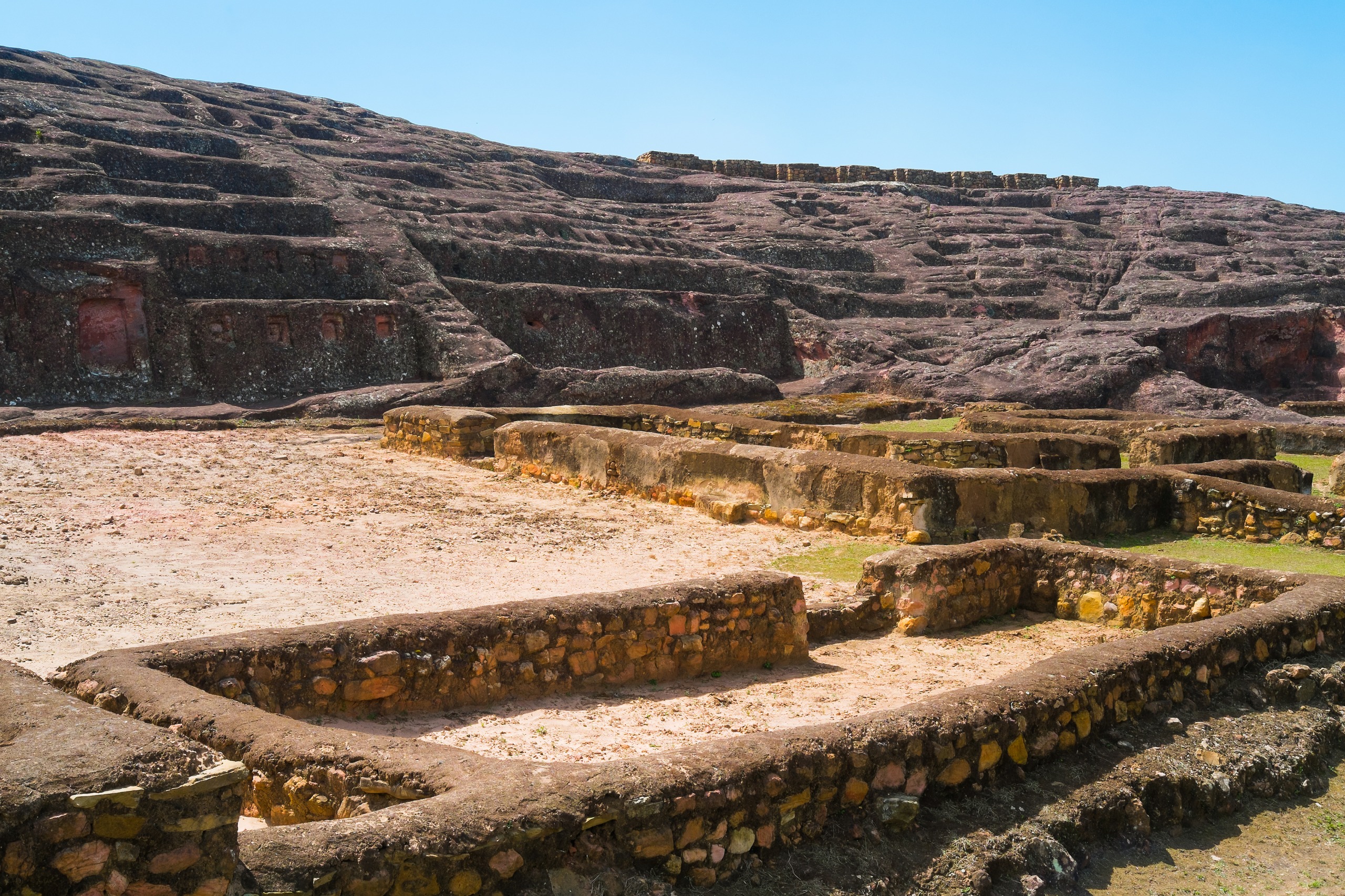
The Samaipata archaeological site (El Fuerte), inscribed in UNESCO World Heritage and presented as the world's largest carved stone, serves as a landmark on the route and can be combined with the waterfalls on the same day.
What to combine in the region
Cascadas de Cuevas fits into a broader stay in the Santa Cruz region:
- Samaipata and its archaeological site: El Fuerte, a former pre-Inca and Inca ceremonial center, listed as a UNESCO World Heritage site. It is the logical departure point for the waterfalls.
- Amboró National Park: established in 1984, covering approximately 430,000 hectares spanning the Andes and Amazon regions. The zone is home to considerable biodiversity, including several hundred bird species. Multiple access points available from Samaipata with a local guide.
- Vallegrande and the Che Route: the village where Che Guevara was executed following his capture at the Churo ravine in 1967. A museum is dedicated to him, and several sites mark the route (hospital laundry, old airfield).
- Santa Cruz de la Sierra: the country's economic capital, whose Basilica of San Lorenzo (1915) overlooks the main square.
Planning your trip to Bolivia
Cascadas de Cuevas fits into a Bolivian itinerary combining the high plateau, valleys, and eastern plains. To build a coherent trip including Samaipata and the Santa Cruz region, explore our custom-made trips to Bolivia.
Interested in this visit?
We can include it in your personalised itinerary.