The Inca Stairway, Lake Titicaca
The Inca Stairway, Lake Titicaca
210 stone steps linking the port to the village of Yumani, on the Island of the Sun: an Inca site steeped in history and mythology at the heart of Lake Titicaca.
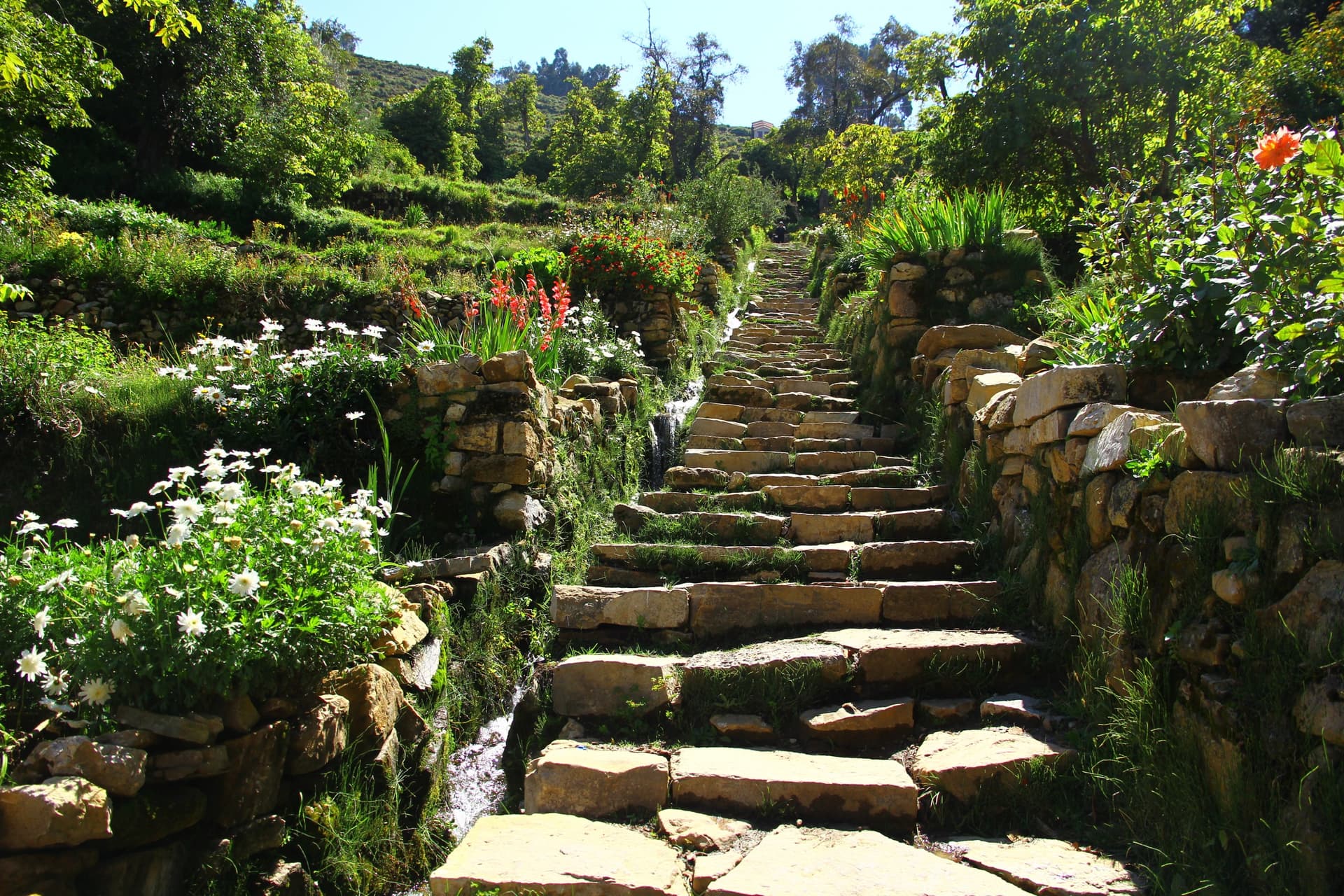
On the Island of the Sun (Isla del Sol), the largest island in Lake Titicaca, a stone stairway of 210 steps connects the small port of Yumani to the village of the same name, perched high above. Attributed to the Inca era and bordered by ritual fountains, this passage concentrates in a few minutes of climbing the essence of what makes the island's archaeological and symbolic value.
Why visit the Inca Stairway
The Inca Stairway is not merely a pathway: it is one of the few remains still in daily use on the Island of the Sun. The residents of Yumani, descendants of the Aymara people, use it every day with their donkeys laden with provisions. Three elements justify the detour:
- a ceremonial fountain with three channels preserved intact at the foot of the steps;
- a panoramic view of Lake Titicaca from the summit, at more than 3,800 metres altitude;
- a strong mythological charge, the island being considered the cradle of Andean civilisation.
Allow 20 to 40 minutes for the ascent depending on your pace and altitude acclimatisation.
History and mythology
The Island of the Sun has been inhabited long before the arrival of the Incas. The Aymara, a people predating the Inca empire, established ritual structures here, some of which were later adopted and expanded by the Incas from the 15th century onwards. The stone stairway as seen today dates from this period of Inca occupation, but it is part of a much older sacred site.
According to Andean cosmogony, the island is where Viracocha, the creator god, is said to have brought forth the first man and woman. The sun god Inti, son of Viracocha, is also said to have been born here. This dual cosmological dimension explains the site's special status, which remains venerated.
The island today has a population estimated at around 3,500 inhabitants, predominantly Aymara, distributed among the villages of Yumani, Cha'llapampa and Cha'lla.
What to see on site
The welcome statues
At the foot of the steps, two stone statues represent an Inca warrior and his companion. They symbolically mark the entrance to the sacred path and guide visitors towards the ascent.
The sacred fountain with three channels
To the left at the bottom of the stairway stands the fountain of youth, sometimes called the fountain of life. Three channels carved in stone allow spring water to flow, which then irrigates the terraced gardens below. The three water outlets are associated with the three worlds of Andean cosmology:
- El Cóndor — the world above (Hanan Pacha), the sky;
- El Puma — the present world (Kay Pacha), the land of the living;
- La Serpiente — the underworld (Uku Pacha), domain of the ancestors.
The water still flows actively and supplies local crops: a hydraulic system operational for over five centuries.
The summit and the view
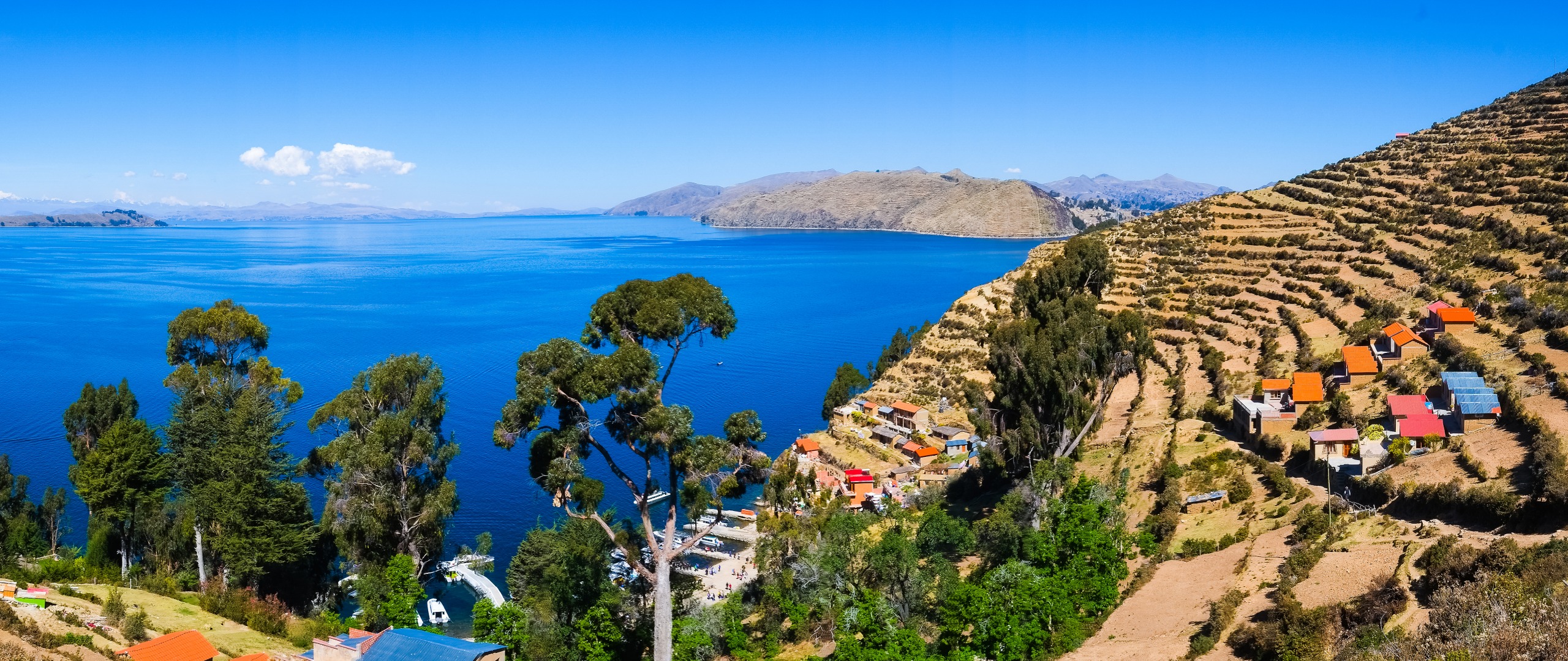
Once at the top of the 210 steps, the village of Yumani extends along the ridge and offers an unobstructed panorama of Lake Titicaca, its deep blue waters and, on clear days, the snow-capped peaks of the Royal Cordillera in the distance.
Practical information
- Altitude: approximately 3,800 m. Plan for prior acclimatisation in La Paz or Copacabana.
- Visit duration: 1 to 2 hours for the stairway and fountain alone; half a day to a full day to explore Yumani and surroundings.
- Ticket: a modest entrance fee is collected on arrival at Yumani port by the local community.
- Equipment: walking shoes, water, sun protection (intense radiation at altitude), warm clothing for late afternoon.
When to go
The dry season, from April to October, offers the best conditions: clear skies, maximum visibility over the lake, passable trails. Nights remain cool, even cold in June and July. The rainy season, from December to March, makes the steps slippery and the boat crossing more uncomfortable.
How to get there
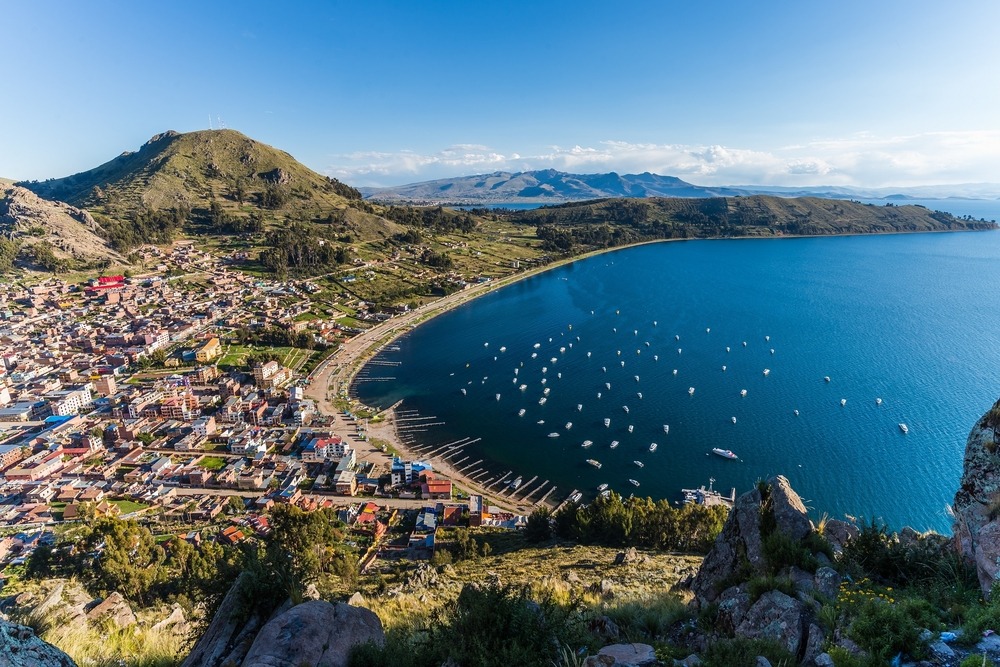
Access is from Copacabana, a Bolivian town located on the south shore of Lake Titicaca. Daily boats connect Copacabana to the southern port of the Island of the Sun (Yumani) in 1.5 to 2 hours of crossing. Several departures are scheduled in the morning and early afternoon; check the previous day with the companies on site, as schedules vary by season and visitor numbers.
Copacabana itself is connected to La Paz by bus in approximately 4 hours, with crossing of the Tiquina strait by barge.
What to see nearby
Once on the island or back on the mainland, several sites extend the discovery:
- the village of Yumani, the point of arrival of the stairway, with its alleys and viewpoints;
- the Iskanwaya archaeological site, another major pre-Hispanic remnant in Bolivia;
- the Cerro Rico mines in Potosí, testimony to colonial history;
- the Chapare valley for a contrast of tropical landscapes.
Frequently asked questions
Frequently asked questions
The stairway has 210 stone steps, dating from the Inca era (15th century), connecting Yumani port to the village situated on the ridge.
The slope is steep and the altitude (approximately 3,800 m) makes the effort more demanding than at sea level. Allow 20 to 40 minutes climbing at your own pace, with breaks. Good prior acclimatisation is recommended.
From Copacabana, boats provide several daily connections to Yumani port (south of the island). The crossing takes 1.5 to 2 hours. Schedules vary by season.
The three water outlets represent the three worlds of Andean cosmology: the condor for the celestial world, the puma for the earthly world, and the serpent for the underworld.
Yes, a modest entrance fee is collected by the Aymara community on disembarkation at Yumani. It funds the maintenance of the sites and the island.
Planning your trip
The Inca Stairway on the Island of the Sun naturally integrates into an itinerary combining La Paz, Lake Titicaca and the Altiplano. To build a tailor-made trip including this stop, consult our suggestions for travel in Bolivia.
Interested in this visit?
We can include it in your personalised itinerary.