Machu Picchu
Machu Picchu
A 15th-century Incan citadel perched at 2,430 m in the Peruvian Andes, Machu Picchu is accessible from Bolivia via a La Paz – Cusco flight.
Machu Picchu is an Incan citadel perched at approximately 2,430 meters above sea level in the Peruvian Andes, overlooking the village of Aguas Calientes. Built in the 15th century, it remains one of South America's best-preserved archaeological sites and ranks among the must-see stops on a combined Bolivia-Peru itinerary, accessible by direct flight from La Paz to Cusco.
Why visit Machu Picchu
The site combines three rare qualities: exceptionally preserved Incan architecture, a spectacular natural setting between two Andean peaks, and symbolic significance tied to its history as a forgotten city later rediscovered. More than 200 stone structures were assembled here without mortar, with millimeter-perfect precision that has withstood earthquakes for five centuries.
The citadel has been inscribed on the UNESCO World Heritage List since 1983 and was designated one of the 7 New Wonders of the World in 2007. For travelers coming from Bolivia, it is often the natural extension of an Andean circuit, complementing visits such as the Valley of the Moon near La Paz.
A five-century history
The earliest traces of human presence in the region date back around 3,000 years before Christ, with the Marcavalle culture. The citadel itself was founded around 1450, during the reign of Emperor Pachacutec, at the height of the Incan Empire. It then housed approximately 750 inhabitants, mainly nobles, priests, and their servants.
Its name means "old mountain" in Quechua. In the early 16th century, internal civil wars weakened the empire, and the Spanish conquest beginning in 1532 hastened the site's abandonment. Reclaimed by vegetation, Machu Picchu escaped colonial looting and remained forgotten for centuries.
In 1911, American explorer Hiram Bingham, guided by local residents, brought the site to international attention. It was designated a historical sanctuary of Peru in 1981, then inscribed on the UNESCO World Heritage List in 1983.
What to see on the site
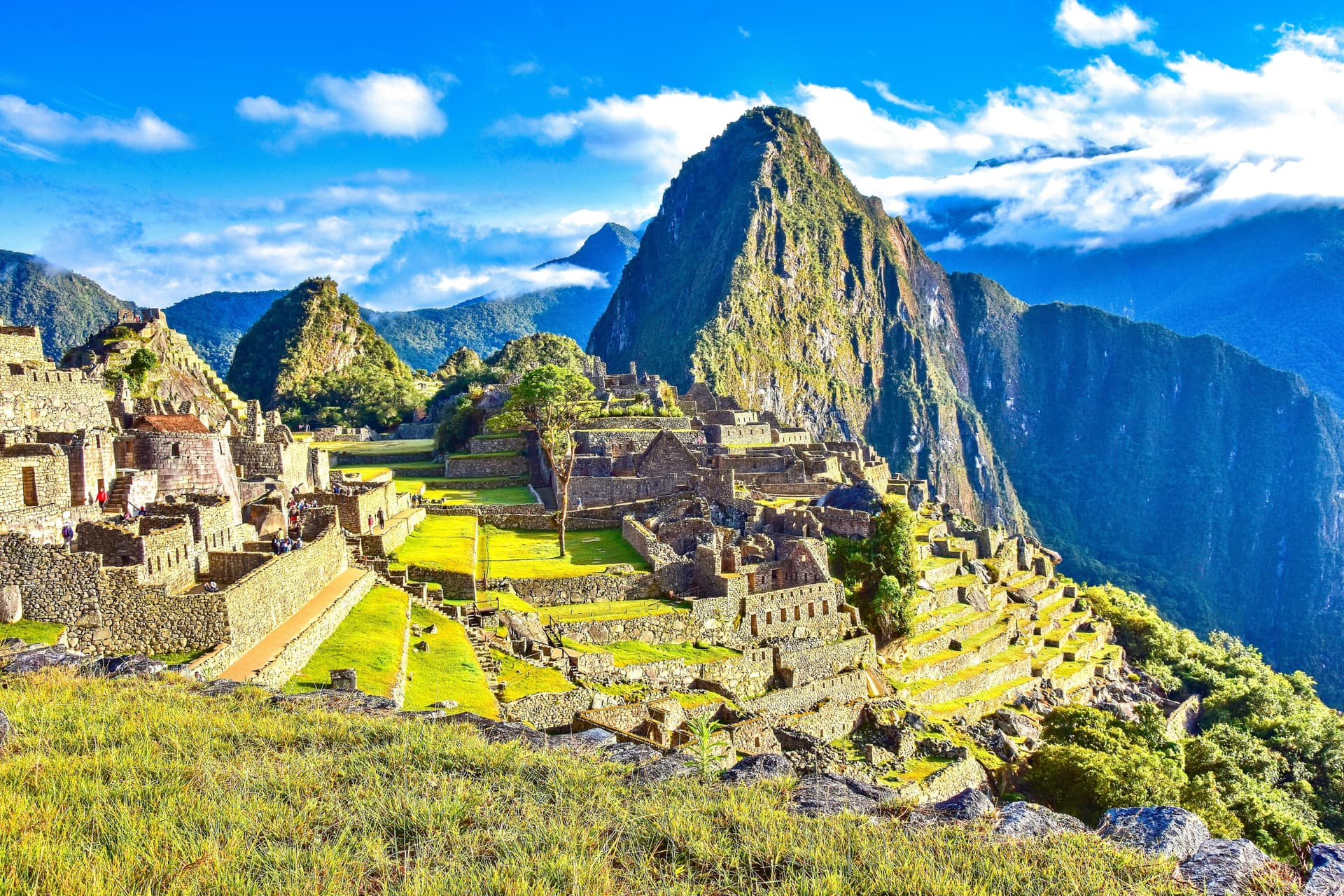
Machu Picchu is divided into an urban zone (ceremonial and residential) and an agricultural zone (cultivable terraces). Several structures merit particular attention.
The urban zone
- The Temple of the Sun: a semi-circular structure with perfectly hewn stones, its window aligns with the sun at the solstice. It served as an astronomical observatory.
- The Intihuatana: a granite solar calendar sculpture, sometimes translated as the "hitching post of the sun."
- The Temple of the Three Windows: its three trapezoidal openings symbolize the three worlds of Incan cosmology—the Hanan Pacha (upper world), the Kay Pacha (earthly world), and the Uku Pacha (underworld).
- The Main Plaza: it separates the ceremonial zone from residential quarters and serves as an excellent vantage point for observing the site as a whole.
The agricultural zone and summits
Terraces cascade down the mountainsides and were used to cultivate maize, potatoes, and coca leaves. They offer an unobstructed view of the Urubamba River below.
- Huayna Picchu, which peaks at 2,720 meters, allows you to observe the citadel from the opposite side. The ascent is demanding and requires a separate ticket.
- Machu Picchu Mountain, higher but less technical, offers a longer climb with expansive panoramas.
- The Sun Gate (Intipunku), the historic entrance to the citadel via the Inca Trail.
- The Temple of the Moon, located in a natural cave at the foot of Huayna Picchu.
The three official circuits
Access to the site is regulated by three circuits, each with multiple routes. Your choice determines what you will be able to see and should be decided before booking.
- Circuit 1 – Panoramic: ascent of Machu Picchu Mountain, upper terraces, access to the Sun Gate and the Inca Bridge (the latter two in high season).
- Circuit 2 – Classic: the most comprehensive route through the urban zone, residential sectors, and lower terraces. This is the most popular itinerary.
- Circuit 3 – Royalty: ascent of Huayna Picchu, royal sectors, access to the Great Cave (Temple of the Moon) and Huchuy Picchu in high season.
Practical information
The site is open year-round, with entry distributed across successive time slots. Advance booking is mandatory, as daily ticket numbers are capped. Prices vary by profile (foreigner, national, student) and circuit chosen, with a supplement for Huayna Picchu or Machu Picchu Mountain ascents. Plan for half a day to a full day on-site.
When to go
The dry season, from May to September, offers the best conditions: mild days, temperatures between 12 and 22 °C, and often clear skies. This is also peak tourist season, so book several weeks in advance. The rainy season (November to March) makes trails slippery and visibility unpredictable, but crowds are thinner.
How to get there
Machu Picchu is located approximately 75 km northwest of Cusco, just above Aguas Calientes (also called Machu Picchu Pueblo). No road connects Cusco to Aguas Calientes; access is by train only, typically departing from Ollantaytambo in the Sacred Valley. A shuttle bus then links Aguas Calientes to the site entrance.
From Bolivia, direct flights connect La Paz to Cusco, making it easy to combine with a visit to the Peruvian Andes. From Lima, allow for a domestic flight to Cusco followed by the train.
Several hiking trails also lead to the site, notably the famous Inca Trail, which takes several days to complete and requires a permit reserved well in advance.
Nearby attractions
Aguas Calientes concentrates most accommodations, from hostels to luxury hotels. For a more authentic stop, Ollantaytambo, approximately two hours by train from the site, preserves an Incan urban fabric with its original cobbled streets and water channels. Cusco remains the regional logistics hub, with its colonial center and its own Incan remains.
On the Bolivia side, extending a Machu Picchu circuit can include the Cerro Rico mines in Potosí, the Chapare Valley, or the rock formation of El Sillar.
FAQ
Frequently asked questions
Yes. Daily entry numbers are capped and time slots fill quickly, especially in high season (May to September). Booking several weeks, even months ahead, is recommended—particularly for circuits including Huayna Picchu.
Yes. Direct flights connect La Paz to Cusco, making it a natural extension of a Bolivian circuit. From Cusco, you then travel to Ollantaytambo and then Aguas Calientes by train.
The classic circuit takes 2 to 3 hours. If you add the Huayna Picchu or Machu Picchu Mountain ascent, allow an additional half day. Many visitors spend an entire day here.
The dry season, from May to September, offers the best weather trade-off, with temperatures of 12 to 22 °C and often clear skies. The rainy season, from November to March, is less crowded but trails can be slippery.
Access remains challenging: sloping terrain, irregular stone steps, and altitude. However, part of the panoramic circuit offers viewpoints accessible from the main entrance.
Extend your journey
Machu Picchu fits naturally into a combined Bolivia-Peru Andean itinerary. To prepare your stay on the Bolivia side, consult our Bolivia travel packages and their extensions toward Peru.
Interested in this visit?
We can include it in your personalised itinerary.