Salar de Uyuni
Salar de Uyuni
11,000 km² of salt at 3,656 meters altitude: Salar de Uyuni alternates between a giant mirror and hexagonal crust, between a cactus island and the colorful lagoons of South Lipez.
It can be seen from the moon. The Salar de Uyuni in southwestern Bolivie is not only one of the most pristine natural wonders in South America, but also the largest salt desert on Earth.
History
Formation
The Bolivian Altiplano emerged when the South American Andes rose some 40,000 years ago. The present-day territory of Salar de Uyuni was once the site of a giant lake named Minchin. Over time, this lake dried up, giving way to smaller bodies of water that eventually evaporated themselves. This process created the salt deserts, including that of Uyuni.
The Legend of Tunupa
In Aymara tradition, the Salar de Uyuni is also called Salar de Tunupa. According to legend, the volcanoes of the Altiplano could once move and converse with one another. Tunupa was the only female volcano in the region. When she became pregnant, the male volcanoes quarreled over who would be the father of her child. Eventually, they stripped the mother of her baby and hid it in Colchani. This act angered the gods, who punished them by taking away their ability to move and speak. Tunupa too was immobilized and silenced. Unaware that her baby was in Colchani, she wept ceaselessly. Her tears covered the barren earth, which gradually became white and salty, giving birth to the Salar de Uyuni.
Salar de Uyuni Today
Approximately 11,000 km². That is the area of Salar de Uyuni on the Altiplano in southwestern Bolivie, making it the largest salt desert on the planet. The quantity of salt at Uyuni is estimated at several billion tons. The site contains one-third of the world's lithium reserves, along with potassium, boron, magnesium, and sodium. Its annual production is estimated at 25,000 tons.
A World Unlike Anywhere on Earth
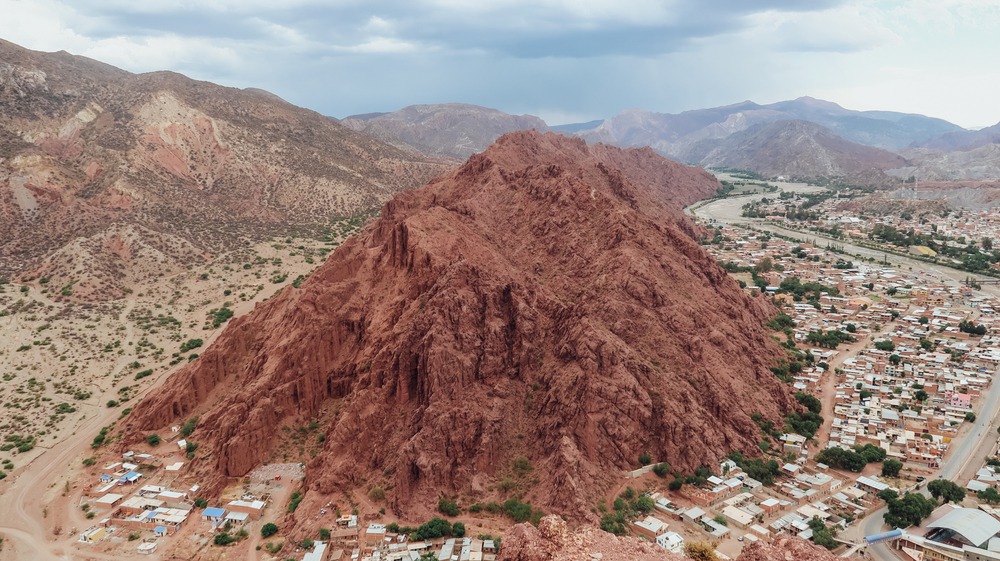
Far more than a simple salt reservoir, Salar de Uyuni ranks among the best tourist destinations in Bolivie. Tours typically begin in the town of Uyuni or the village of Tupiza and can extend over several days, depending on travelers' preferences. Beyond the breathtaking panoramas across this immaculate horizon, various stops punctuate the visit to Uyuni's salt desert.
The journey begins 20 minutes by car from Uyuni, at the old Colchani salt factory. As you progress, the landscape becomes increasingly barren, giving way to a vast white expanse that seems to stretch endlessly. Nothing grows in the Salar except giant cacti—the largest reaching a dozen meters—on the coral island of Incahuasi. Once an island beneath the sea, this island is also known as "House of the Inca" and rises across 24 hectares in the middle of the Salar. The tour continues through salt extraction zones to the lagoons and geysers located along the Chilean border.
A Playground for Photographers
After a historic photo session with the rusted locomotives of the Uyuni train cemetery, take advantage of the wide, flat, and homogeneous horizon of the Salar to capture mind-bending perspective shots. Have fun staging all sorts of creative scenes with your objects: a friend balancing on a bottle or wearing oversized shoes, pinching a person between your fingers, and so on. Let your creativity run wild and capture that ultimate shot that will dazzle your social media followers! Don't miss the salt sculpture honoring the Dakar Rally in Bolivie, standing at the edge of a forest of flags planted by travelers. And be sure to immortalize the view of the queen of the place, Tunupa.
Climate
The Uyuni salt desert experiences two distinct seasons. The rainy season spans December to April, during which the Salar produces an enchanting mirror effect. Keep in mind, however, that tours may be canceled in December and January if rainfall is excessive. During the dry season, which lasts from May to November, temperatures cool and the Salar's surface hardens, allowing visitors to traverse it to reach more remote areas. The months of June to August are the most popular times for travelers to explore the Salar de Uyuni.
The starting point for discovering the Salar is typically the town of Uyuni, departing from Plaza Arce. Day excursions are available, though they are insufficient to fully enjoy the Salar's attractions. Instead, opt for three-day or longer circuits that include visits to desert zones beyond the salt plain. Alternatively, guided trips to the Salar are possible from the village of Tupiza. These emphasize the lakes and geological peculiarities of the salt desert and conclude in Uyuni.
If you want to explore the Salar on your own, you can take a bus toward Colchani and the salt marshes from the Bus Terminal or Avenida Arce, then ask the driver to drop you at your chosen location. While this is a good way to explore the desert at your own pace, you'll need to hike for at least two hours to reach accommodations in the area. In any case, make sure you're well acclimatized to the altitude before embarking on these small expeditions.
Jeep tours are the most common option among travelers for exploring the salt flat. Indeed, walking or cycling through the Salar is impractical due to its vastness and harsh environment. Moreover, you can easily become lost without good local knowledge. A guide's accompaniment is always recommended. For multi-day circuits, unique hotels await you in the heart of the desert. Even if their comfort seems rustic, you won't soon forget the walls and furniture entirely made of salt!
What to Do?
- Capture unusual photos
- Greet the giant cacti on Incahuasi Island
- Visit salt extraction zones
- Stay in a salt hotel
- Discover the lagoons located at the borders of Bolivie and Chile, and more
Want to discover this destination?
Our local advisors design your tailor-made trip.