Santa Cruz and Chiquitania
Tropical Bolivia at 28°C, six carved wooden Jesuit missions classified as UNESCO World Heritage, and a baroque music festival played by the Chiquitanos for three centuries.
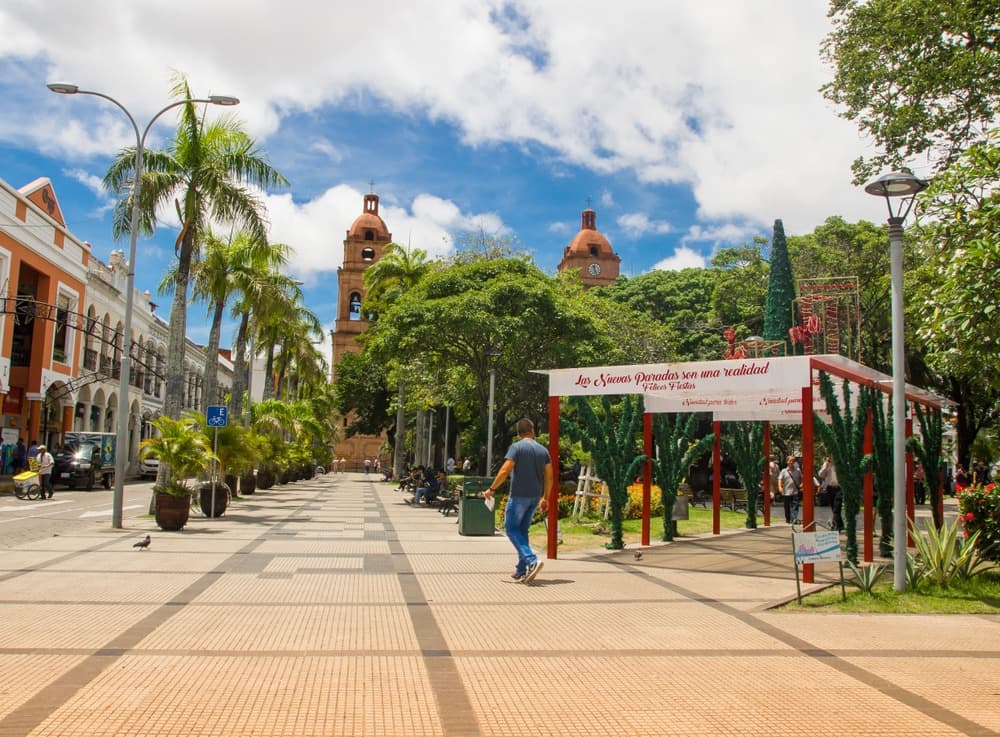
Santa Cruz de la Sierra, at 416 meters altitude, radically shifts how you perceive Bolivia. Here, no windswept Altiplano or markets draped in aguayo textiles: a tropical city of 1.7 million inhabitants, laid out in concentric rings, where the average temperature hovers around 28°C year-round and climbs to 35°C in November. It's the country's economic engine, fueled by soy, cattle ranching, and natural gas, with a population blending Spanish descendants, Croats, Mennonites in blue overalls from the Chaco, and migrants from the highlands.
The city itself warrants a day's visit: Plaza 24 de Septiembre with its brick cathedral, Los Pozos market to taste majadito (rice with dried beef jerky) or a grilled yuca sonso on a stick, and the Equipetrol neighborhood to understand how the cruceña middle class lives. For our team, the region's real draw begins the moment you venture beyond the urban perimeter.
Fifty kilometers west lies Amboró National Park, marking the confluence of the Andes, Amazon, and Chaco. Nearly 1,000 bird species have been recorded there, with Yungas tree ferns neighboring lowland palms. Further south, Lomas de Arena National Park offers red sand dunes thirty minutes from the city center—an unexpected landscape on the edge of tropical forest. An hour and a half's drive away, Samaipata and its pre-Columbian fortress of El Fuerte, a massive sandstone block carved with serpents and felines, predate the Incas and are UNESCO-listed.
But the main draw for a stay here remains Chiquitania, east of Santa Cruz on the route toward Brazil. Between 1691 and 1760, Italian, Swiss, and German Jesuits—including composer Domenico Zipoli and architect Martin Schmid—founded ten mission towns in this dry forest region inhabited by the Chiquitanos. Six of these villages, San Javier, Concepción, San Ignacio de Velasco, San Miguel, San Rafael, and Santa Ana, preserve their baroque wooden churches, with cuchi wood framing (a local timber nearly impervious to decay), twisted columns painted with floral motifs, and gold-leafed altars. The ensemble has been UNESCO World Heritage-listed since 1990.
What keeps these missions alive is that baroque music transcribed and preserved by the Chiquitanos over three centuries is still performed there: more than 5,000 musical scores were found in the sacristies. Every two years, in late April, the International Festival of Renaissance and American Baroque Music rotates European ensembles and local choirs through the six villages over ten days. It's one of the rare moments the region fills with visitors; otherwise, you encounter mainly the Chiquitano inhabitants, their woodworking and wood-carving workshops, and a handful of seasoned travelers.
For those venturing further, Chiquitania opens onto the Bolivian Pantanal around Puerto Suárez and San Matías—a wetland less frequented than its Brazilian counterpart, where spotting caimans, capybaras, and jaguars happens on horseback or by dugout canoe from a few estancias.
Must-see
Concepción Church and its restoration workshop. Cuchi wood framing from 1756, columns painted with flowers and Chiquitano angels. The adjacent workshop still trains local sculptors restoring all six missions.
El Fuerte de Samaipata fortress. A 220-meter sandstone block carved with serpents and felines, occupied by the Chané and later the Incas. Two hours' drive from Santa Cruz, on the route to the eastern Yungas.
Chiquitania baroque festival (April, even-numbered years). Ten days of concerts in the six UNESCO churches, with 18th-century scores discovered on site. Book a year in advance; rooms are scarce in San Ignacio.
Amboró National Park, northern side. Andino-Amazonian transition forest, departure from Buena Vista. Nights in rustic lodges, hikes among giant ferns, spotting hoatzins along the Surutú river.
Los Pozos market in Santa Cruz. For lunch of majadito, locro cruceño, or copoazú juice at midday, among butchers, herbalists, and Amazonian fruit stalls.
When to go
The dry season, May through September, offers the most comfortable window: daytime temperatures between 22 and 28°C, low humidity, and Chiquitania tracks easily passable. June and July may see surazos—cold wind gusts from the south that drop temperatures to 10°C for two or three days—so bring a fleece despite the tropical setting. October through March is the rainy season: stormy afternoon showers, heavy heat at 33–35°C, and some secondary Chiquitania tracks (toward San José or the Pantanal) become muddy or impassable.
For the baroque festival, held in late April on even-numbered years, you're at the end of the rainy season: lush greenery, temperatures around 26°C, though showers remain possible. Local high season—mid-July and each mission's patronal festivals (July through September)—requires booking lodging in advance, as supply remains limited in the villages.
Practical tips
Budget 4 to 5 days minimum to combine Santa Cruz, Samaipata, and a short circuit in Chiquitania (San Javier, Concepción, San Ignacio); 7 days for the complete loop of all six missions with return via San José de Chiquitos. Distances are considerable: 490 km between Santa Cruz and San Ignacio—8 to 9 hours by bus or car—so we recommend a domestic flight to San Ignacio if time is tight, or a private vehicle with driver allowing stops at workshops and estancias.
Viru Viru International Airport, 17 km from Santa Cruz's center, serves La Paz, Sucre, Cochabamba, and several South American capitals. The most natural pairing combines with Sucre and Potosí at the start or end of your Bolivia trip, for the contrast between tropical lowlands and colonial highlands. An Amazon extension from Rurrenabaque is possible but requires returning via La Paz. Comfort is solid in the missions (charming hotels run by local families, sometimes in former colonial houses), more basic if you venture toward the Pantanal. This region suits travelers interested in Jesuit history, early music, timber architecture, and those seeking Bolivia beyond the Uyuni and Titicaca trail.