Renting a Car in Bolivia: All Our Tips
Planning to explore Bolivia on your own and considering renting a vehicle? From advantages and disadvantages to different vehicle types,
Planning to explore Bolivia on your own and considering renting a vehicle? From advantages and disadvantages to different vehicle types, driving rules, and essential items to bring... Discover our complete guide to renting a car in Bolivia.
The Advantages of Renting a Car in Bolivia
Renting a car to explore Bolivia offers numerous advantages. It allows you to take your time, be more flexible, and travel at your own pace. It's also the best way to discover remote locations, admire the landscapes, stop whenever you wish, and meet locals without feeling rushed. In a nutshell, it's about taking your time and traveling with complete freedom.
The Drawbacks of Renting a Car in Bolivia

While car rental offers many advantages, there are also some drawbacks to consider. First, Bolivian roads are not always in good condition. Although the road network has been developing for several years, roads outside major routes can be severely deteriorated: they are often dirt tracks and paths with numerous potholes. This is particularly the case in the Amazon basin.
Additionally, navigation can be challenging. Furthermore, you need to be capable of driving in high mountains and crossing passes at very high altitudes.
What Type of Vehicle Should You Choose?

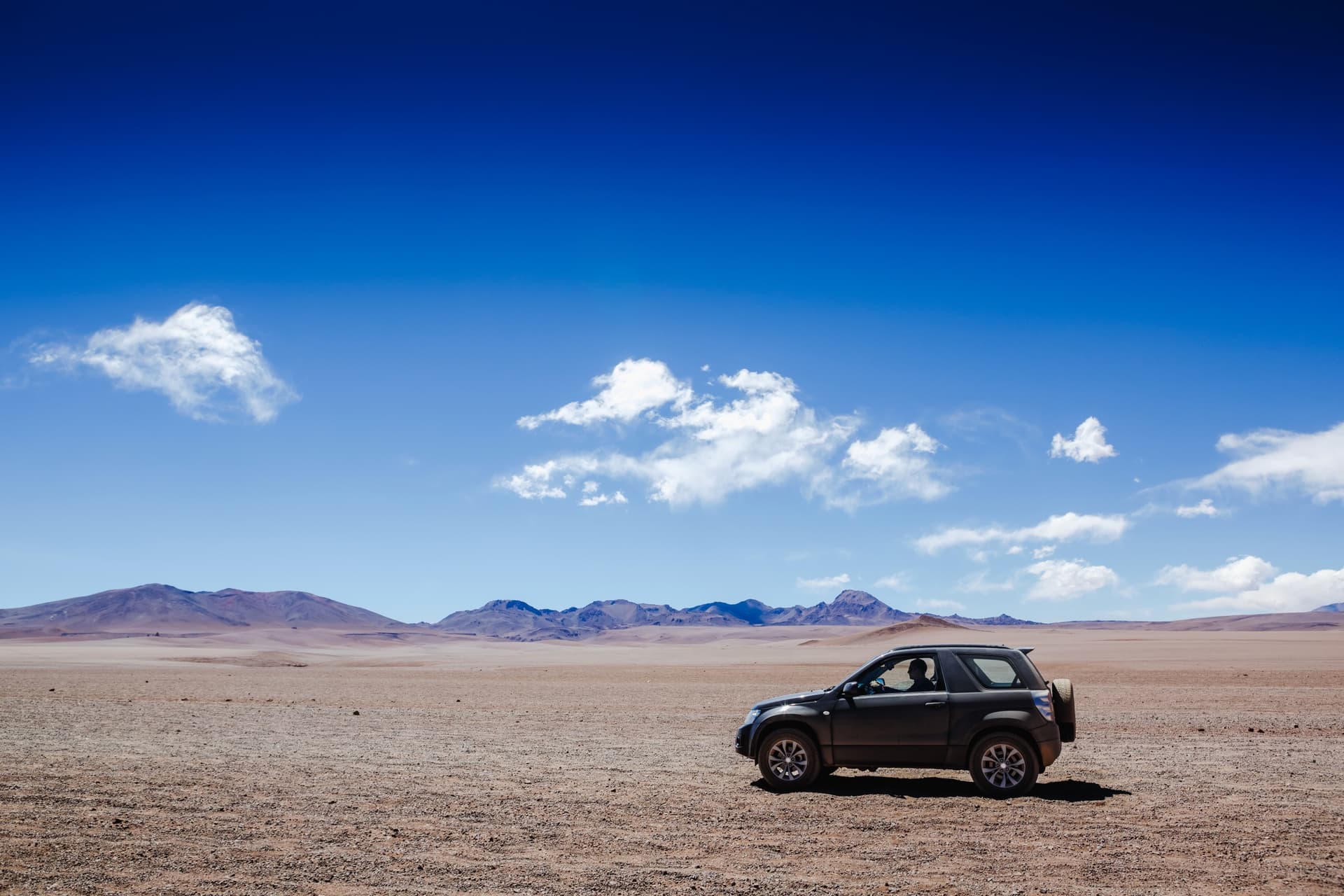
You can rent any type of vehicle when traveling in Bolivia. However, due to road conditions, we strongly recommend choosing an SUV or 4x4. You'll feel safer, and you'll be able to more easily visit Bolivia's most isolated areas.
What is the Legal Driving Age in Bolivia?

Bolivians can drive from age 18. However, for travelers wishing to rent a car in Bolivia, you must be at least 21 years old, knowing that persons aged 21 to 24 may be required to pay additional fees to rent a vehicle as a young driver.
What Do You Need to Rent and Drive a Car in Bolivia?

Driver's License
A national driver's license can be sufficient to rent a car in Bolivia, provided it is written in the Roman alphabet. If this is not the case, an international driver's license is necessary.
Insurance
Most car rental companies offer to include third-party liability insurance in the package. However, we strongly advise you to add additional coverage (such as theft protection or personal accident protection) to avoid costs in case of problems. It may also be wise to take out roadside assistance coverage (roadside service) in case of car breakdown.
In any case, take time to carefully read the terms and conditions when renting to avoid surprises in case of issues! Also remember to purchase travel insurance before your departure.
Emergency Kits (Spare Tire, Fuel Cans...)
Bolivia holds exceptional wild nature. You will sometimes be led to cross vast stretches without ever encountering any infrastructure. In the Salar d'Uyuni, for example, you can easily find yourself lost in the middle of nowhere. To say the least, you'd be well-advised to be organized and well-equipped.
Among the essential accessories to prepare for driving in Bolivia, we can mention:
A GPS: this is essential to navigate in a country where road signs are rare;
A tool kit and spare tires (you can never be too careful);
Fuel cans and reserves of oil/fluid: it's not always easy to find gas stations;
Supplies of water and food as well as warm clothing (in case of breakdown in the middle of nowhere).
Traffic Rules: Driving Regulations in Bolivia

Traffic and Intersections
Bolivian traffic rules are very similar to European ones (although at first glance, you might get the impression there are none). Driving is on the right.
At intersections, the vehicle coming from the right has priority. But it often happens that the driver who arrives first or who honks passes first. In roundabouts, the car entering has priority (unlike in Europe).
On mountain roads, vehicles going uphill have priority. When overtaking and approaching a curve, Bolivians generally use the horn to signal their presence.
Speed Limits
In town, the maximum speed is 40 km/h. Outside built-up areas, the speed limit generally does not exceed 70 km/h (unless specific signs indicate otherwise). In any case, given the state of the roads, you'll rarely exceed 50 km/h.
Bribes
Bribes are relatively common in Bolivia. If police officers stop you, be patient and courteous. If they ask to see your passport, it's better to show them a photocopy.
What if you choose a car with a driver or a self-drive tour?
Given the poor state of roads, lack of signage, the need to cross high-altitude passes, and sometimes dangerous driving by other motorists, renting a car in Bolivia can turn into quite an adventure. This is why many travelers prefer to rent a car with a driver. Although more expensive, this option allows you to explore Bolivia more peacefully. Another option to consider: a self-drive tour. This formula lets you visit Bolivia with complete freedom without having to organize your trip. You pick up your rental car at the airport and simply follow an itinerary previously planned according to your preferences. Our agency also provides you with a travel journal with all the best recommendations. Whether for renting a car with or without a driver, or for organizing a self-drive tour in Bolivia, don't hesitate to contact us.
Frequently asked questions
In Bolivia, it is strongly recommended to rent an SUV or 4x4. The often poor condition of roads, especially outside major routes, and the numerous dirt tracks require a robust vehicle with good ground clearance. A 4x4 is essential if you want to explore remote areas like the Salar d'Uyuni or the Amazon basin.
A national driver's license is generally sufficient to rent a car in Bolivia, provided it is written in the Roman alphabet. If your license uses another alphabet (Cyrillic, Arabic, etc.), you must obtain an international driver's license before departure.
To rent a car in Bolivia as a foreign traveler, you must be at least 21 years old. Drivers aged 21 to 24 may be subject to additional fees for young driver surcharge, depending on rental agencies.
Most rental agencies include basic third-party liability insurance. However, it is highly recommended to add theft protection, personal accident protection, and roadside assistance. Also consider purchasing comprehensive travel insurance before departure to be covered in case of unforeseen circumstances.
To drive in Bolivia, carry your driver's license (national or international), your passport (or a photocopy), vehicle documents, and your insurance. For equipment, bring a GPS, spare tires, a tool kit, fuel cans, water supplies, food, and warm clothing for high-altitude areas.
Night driving in Bolivia is strongly discouraged, particularly on mountain roads and tracks outside major cities. The lack of signage, potholes, poor visibility, and risks from stray animals on the road make night driving particularly dangerous.