The Basilica of Our Lady
The Basilica of Our Lady
A whitewashed colonial sanctuary on the shores of Lake Titicaca, the Basilica of Copacabana houses the Virgin, patroness saint of Bolivia, and a unique religious syncretism.
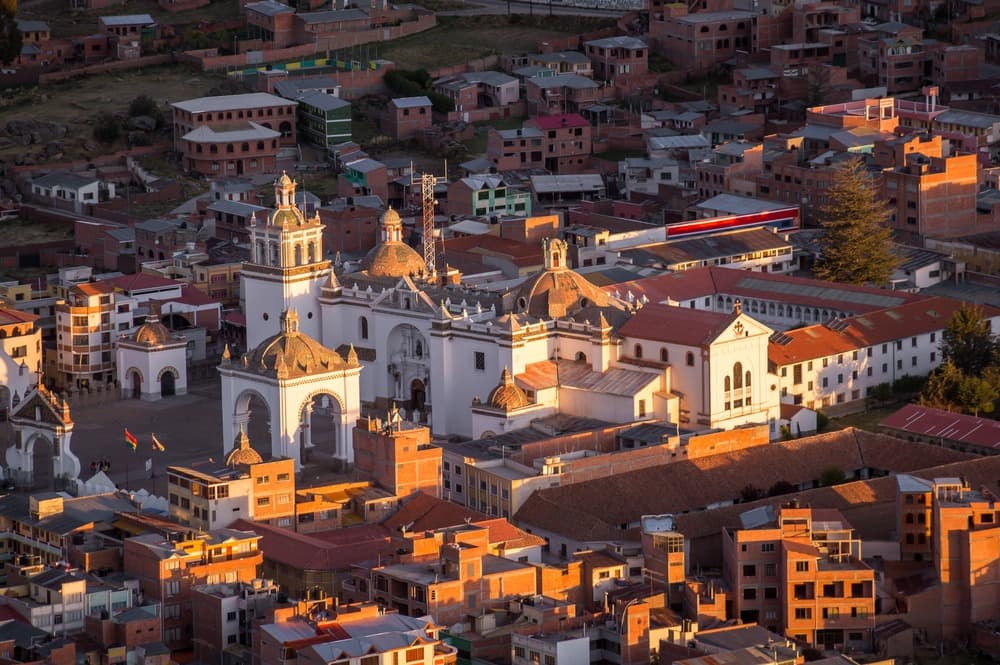
The Basilica of Our Lady of Copacabana, also known as the Basilica of the Virgin of Candelaria, stands in Copacabana, on the shores of Lake Titicaca, near the Bolivian Altiplano. This whitewashed colonial edifice houses the Virgin of Copacabana, a statue carved in the 1580s and recognized as the patroness saint of Bolivia. Once represented by indigenous populations as an Inca princess, she remains today a major figure in Andean popular devotion.
Why visit the Basilica of Copacabana
The Basilica brings together several facets of Bolivia: colonial architecture, religious syncretism, and living traditions. It is one of the rare sanctuaries where one can witness the Bendición de movilidades, a blessing of new vehicles sprinkled with beer or champagne, a legacy of Christianity blended with Andean rites. The site also marks the starting point for Lake Titicaca and Isla del Sol, making it a logical stop on any itinerary in the region.
- Virgin statue sculpted in the late 16th century, patroness saint of the country
- White architecture with domes and colored tiles, nicknamed the "Temple of the Sun"
- Religious festivals and vehicle blessings throughout the year
- Ascent of Cerro Calvario for sweeping views over Lake Titicaca
History of the Basilica
The sanctuary was founded on the ruins of an Inca temple, an ancient ceremonial center dedicated to the god of fertility. After an initial modest church, Spanish architect Francisco Jiménez undertook the construction of a new building, whose administration was initially entrusted to the Augustinians. The place, nicknamed the "Temple of the Sun," became a convergence point for Catholic faithful as well as indigenous communities, who projected their own cults there.
The Virgin of Copacabana, sculpted in the 1580s, was first assimilated to an Inca princess by local populations before being consecrated patroness saint of Bolivia. On April 22, 2013, the Basilica experienced a robbery: about twenty objects were stolen and several gold and silver accessories were removed from the statue, an event that deeply affected the community.
What to see on site
The exterior and architecture
The Basilica is recognized by its white façade, its domes, and roofs covered with colored tiles, in a style often compared to Moorish mudéjar. Four chapels arranged at the corners of the garden surround the main building and structure the procession space. The carved doors and ceramic details deserve time for observation before entering.
The interior and the Virgin
Inside, the central altar welcomes the statue of the Virgin of Copacabana, carefully maintained and surrounded by offerings. Above it, a small golden statuette and a little silver boat represent the sun and moon, a symbolic legacy of Andean syncretism. The statue is traditionally not moved from its location, out of fear of floods according to local belief.
The museum
A small adjoining museum houses European paintings and religious artworks. You will also find an obscure curiosity: a collection of paper cranes offered by a Japanese woman who came to pray for a talented child. Allow 30 to 45 minutes for the museum visit.
Cerro Calvario
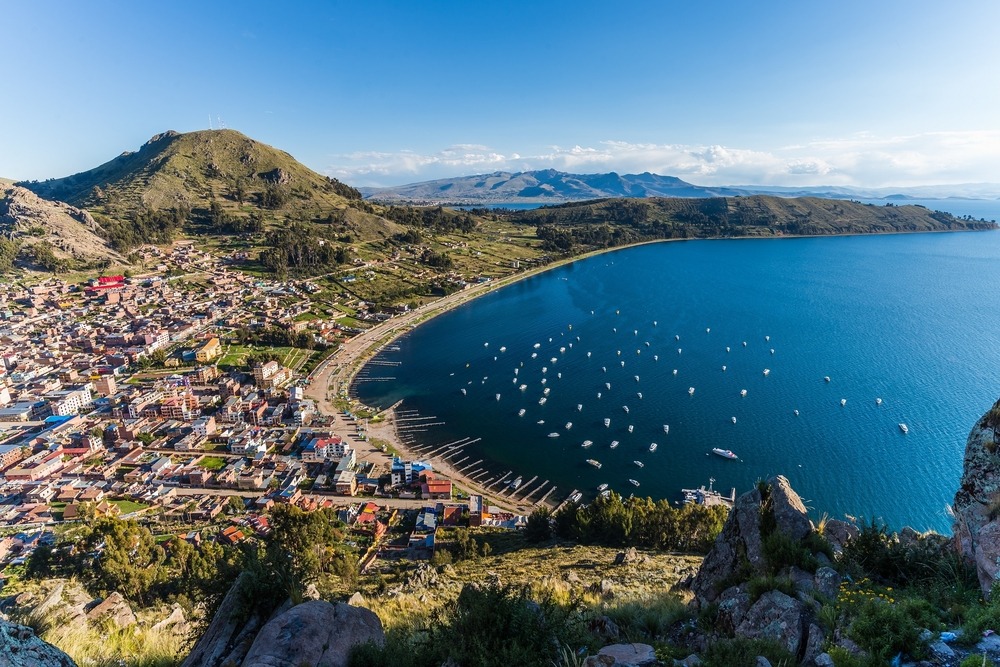
A few minutes' walk from the Basilica, Cerro Calvario rises to approximately 3,950 meters and overlooks the bay. The trail follows a path marked with stations of the cross to the summit, where large white crosses and ceremonial tables stand. Pilgrims practice a blend of Christian and traditional rituals, accompanied by incense smoke and offerings. The ascent takes 30 to 45 minutes depending on pace and acclimatization to altitude.
When to visit
The Basilica can be visited year-round, but certain dates concentrate most of the fervor:
- February 2: Fiesta de la Virgen de Copacabana, with traditional dances and music
- Good Friday and Easter Sunday: high attendance at Cerro Calvario
- August 5-6: celebrations around Bolivian national holiday
- Every weekend, at dawn: Bendición de movilidades on the basilica forecourt
The dry season (May to October) offers the best conditions for combining visits and lake excursions. The rainy season (December to March) remains accessible but more humid.
Practical information
- Access: entry to the Basilica is generally free; a small fee applies to the museum
- Hours: open daily, with broad daytime hours; reduced hours on Sundays during services
- Dress code: shoulders and knees covered, silence during masses; photos sometimes prohibited inside
- Altitude: Copacabana is at approximately 3,840 m, allow time for acclimatization before ascending Cerro Calvario
- Duration of visit: 1 hour for the Basilica alone, 2-3 hours including museum and Cerro Calvario
How to get there
Copacabana is reached primarily from La Paz, approximately 155 km away. Several options exist:
- Tourist bus from La Paz: 3.5 to 4 hours, with crossing by barge through the Tiquina strait
- Shared minibus from La Paz cemetery: cheaper, similar duration
- From Puno (Peru): 3 to 4 hours, border posts at Yunguyo / Kasani
The Basilica is located in the center of Copacabana, a few minutes' walk from the port and most accommodations.
Nearby attractions
- Isla del Sol: sacred island of the Incas, accessible by boat from Copacabana port, with possible stop at Challapampa in the north of the island
- Lake Titicaca: the world's highest navigable lake, ideal for sunset boat trips
- Cerro Calvario: 15 minutes' walk from the Basilica
- La Paz: administrative capital approximately 4 hours by road, connection point to other sites such as the Chapare Valley
Frequently asked questions
Frequently asked questions
Preparing your trip
The Basilica of Copacabana fits naturally into an itinerary combining Lake Titicaca, La Paz, and the Andean highlands. To build a custom itinerary incorporating this stop, consult our trips to Bolivia.
Interested in this visit?
We can include it in your personalised itinerary.