Moon Island
Moon Island
On Lake Titicaca, Isla de la Luna is home to the Inca virgins' palace and a sacred trail. A discreet site to combine with Isla del Sol from Copacabana.
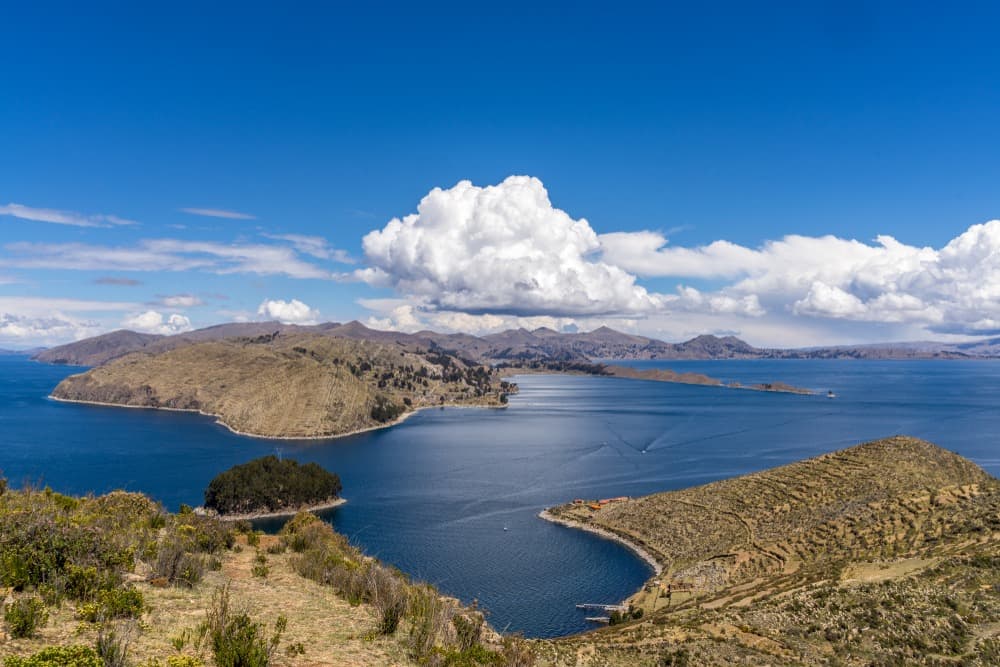
Isla de la Luna, also known as Coati Island, is a 105-hectare island on Lake Titicaca in Bolivie. Regarded as the second sacred Inca island after Isla del Sol, it houses the remains of the virgins' palace (Iñak Uyu) and retains an agricultural character shaped by Aymara life. Its inhabitants today live from farming, fishing, crafts, and textiles.
Why visit Isla de la Luna
- A well-preserved Inca site far less crowded than neighboring Isla del Sol.
- The virgins' palace, where future priestesses of the Inca empire were trained.
- Pre-Hispanic agricultural terraces still under cultivation, framed by the snow-capped peaks of the Royal Cordillera.
- An excursion accessible from Copacabana, often combined with Isla del Sol.
History and significance of the site
The island owes its nickname of "island of women" to the role it played under Inca rule. Construction of its main building is believed to have been led under the direction of young heir Tupac Yupanki. The goal: to train acllas, young women destined to become priestesses. The chosen ones could then become wives of the emperor, or be offered in sacrifice during full moon ceremonies—a status that was both religiously complex, honorific, and constrained.
The building, initially named "ajia wasi," was renamed "Inak Uyu." The Aymaras, present on the island both before and after the Inca empire, are today its sole permanent inhabitants.
What to see on the island
Yumani port and access staircase
Disembarkation typically occurs at the Yumani port, the main arrival point. A 500-step staircase leads into the island's interior. Midway up, you'll spot the fountain of eternal youth: a three-jet stone structure, a symbolic marker of pre-Hispanic civilizations. Below stand statues of Manco Cápac and his sister-wife Mama Ocllo, founding figures of Inca mythology.
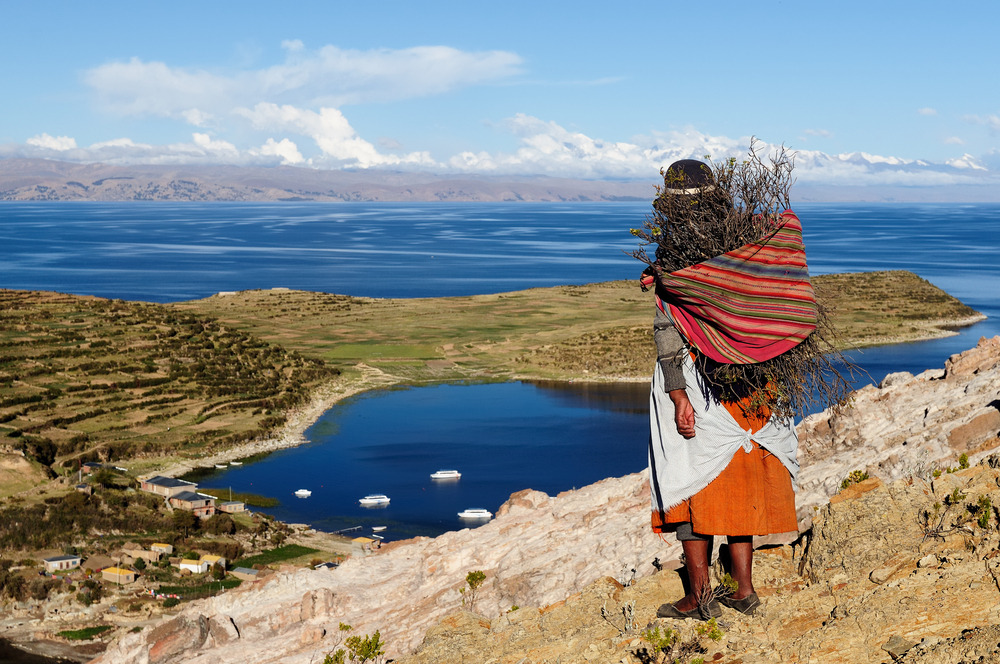
Along the pathways, you'll encounter herds of llamas and mules, as well as cholitas, Aymara women wearing bowler hats and long braids, dressed in colorful traditional garments.
The virgins' palace (Iñak Uyu)
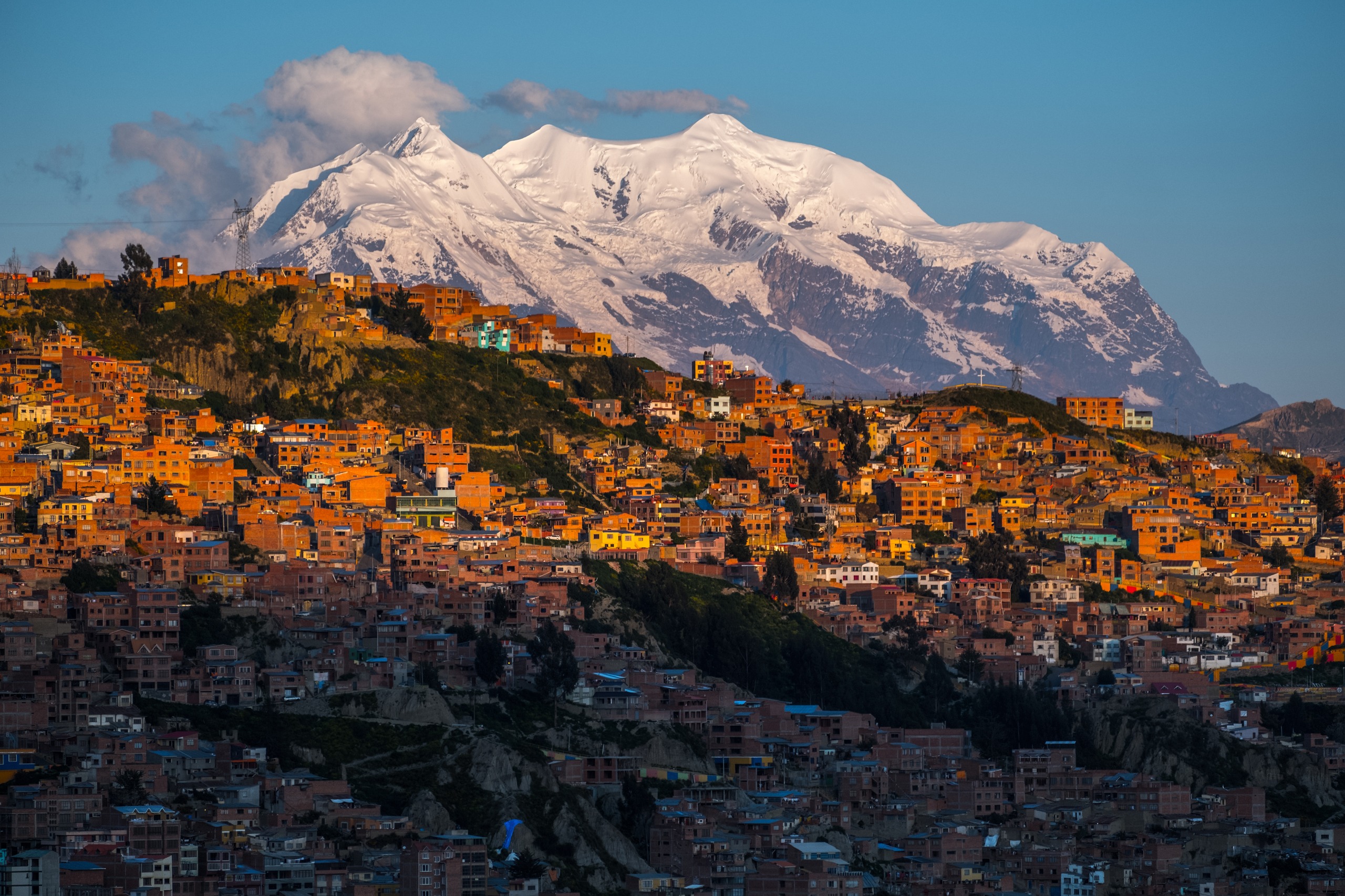
The centerpiece of the site, the virgins' palace measures approximately 50 m long by 24 m wide. Its façade is adorned with stone and adobe niches, and the complex contains about thirty rooms arranged around interior courtyards, with temples oriented eastward. The building rests on three levels of cultivated terraces. Opposite, Mount Illampu closes the horizon.
The Warmi Thaki trail
The Warmi Thaki, or "woman's path," climbs the hill overlooking the palace. The trail is dotted with signs describing local medicinal plants: cedron, q'oa, romero, and eucalyptus, used notably for dyeing and washing. At the summit, the panorama encompasses the lake, Cerro Llampu, and the Royal Cordillera. The other side shelters a small place of worship.
How to get there
Access to Isla de la Luna is exclusively by boat, primarily from Copacabana, on the Bolivian shore of Lake Titicaca. The crossing covers approximately 7 km and lasts about fifty minutes depending on conditions. Most excursions combine Isla de la Luna with the Isla del Sol, larger and better known, over a day or two with an overnight stay.
Practical information
- Duration of visit: allow 1.5 to 2 hours on the island, longer if you reach the summit via Warmi Thaki.
- Physical effort: the 500-step staircase and hill ascent take place at altitude (lake at approximately 3,800 m). Bring water and take a slow pace.
- Entry fee: a small community ticket is usually collected upon arrival, payable in liquid bolivianos.
- Equipment: hiking shoes, sun protection, windbreaker (the lake is windy).
- Respect: inhabitants are few in number; ask before photographing people.
When to visit the island
The best period runs during the dry season, from May to October: clear skies, optimal visibility of the Royal Cordillera, more stable crossings. Temperatures remain cool due to altitude, especially at sunrise and sunset. The rainy season (December to March) brings greener landscapes but also possible boat cancellations due to bad weather.
Nearby
Isla de la Luna is almost always visited in conjunction with other sites on the Bolivian altiplano:
- Isla del Sol, a few kilometers away, the mythical cradle of Inca civilization.
- Copacabana, the departure point for excursions, famous for its Marian basilica.
- To extend archaeological discovery, the Iskanwaya archaeological site in the Llica valley.
- On the industrial heritage side, the Cerro Rico mines in Potosí offer another perspective on Andean history.
Frequently asked questions
Frequently asked questions
Plan your trip
Isla de la Luna fits naturally into an itinerary combining Lake Titicaca, La Paz, and the altiplano. To build a bespoke stay including this site and other Andean stops, explore our Bolivie travel packages.
Interested in this visit?
We can include it in your personalised itinerary.