Where to Observe Pink Flamingos in Bolivie?
The pink flamingo is a unique bird of its kind. Perched high on slender legs, it stands out from its peers through its distinctive coloration.
The pink flamingo is a unique bird of its kind. Perched high on slender legs, it stands out from its peers through its distinctive coloration. White or grey at birth, this wading bird takes on a pink hue in adulthood. The reason? A diet composed of crustaceans and a red-colored alga called "Dunaliella salina", which thrives in areas with high salinity. Wondering where to observe pink flamingos in Bolivie? Discover the finest viewing spots in South Lípez, as well as the Atacama salt flat, on the other side of the Bolivie border!
Pink flamingos in Bolivie: two magnificent lagoons to see them
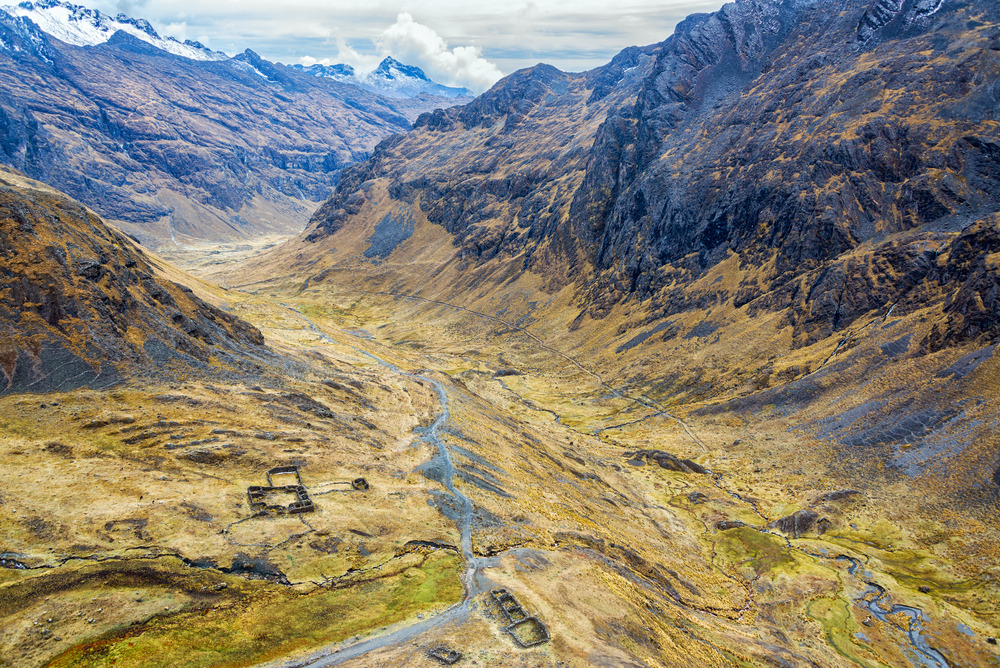
Bolivie is renowned for its magnificent lagoons located in the province of South Lipez. Among them, Laguna Colorada and Laguna Verde, known for their ruby-red and emerald-colored waters. Located within the Fauna Andina Eduardo Avaroa national reserve, they belong to a vast area spanning 7,000 km². An opportunity to appreciate the wild expanses of Bolivie, admire the mountains (the highest peaks of the Andes cordillera) or catch glimpses of one of 96 animal species – including flamingo colonies that inhabit the salt marshes!
1 - Laguna Colorada
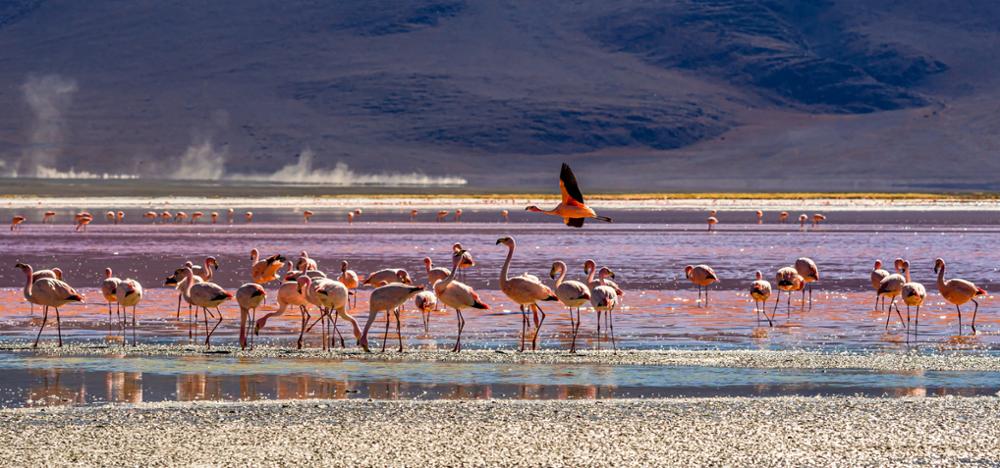
The Laguna Colorada owes its red hue to the abundant presence of Dunaliella salina in its waters. Originally green, this aquatic plant produces a significant amount of red pigments to protect its chlorophyll from ultraviolet rays. The water's pigmentation varies with fluctuations in salinity: the pink flamingo's plumage is therefore more or less intense, depending on changes in its natural environment!
2 - Laguna Verde
Located 90 km south of the Red Lake, Laguna Verde boasts equally incredible plankton flora and fauna. Composed of copper, lead carbonate, sulfur and a large quantity of diatoms (microscopic algae), its waters take on a magnificent green hue, almost surreal.
Situated at over 4,000 meters altitude, the lagoon is quite difficult to access. Fortunately, 4x4 excursions make it possible to reach this exceptional site. One example? Exclusive Bolivie introduces you to the extraordinary multicolored lagoons nestled in the heart of the land, and the legendary Lake Titicaca, considered the world's highest navigable lake.
Spotting wading birds: two criteria to keep in mind
While pink flamingos are year-round residents of Bolivie's lands, certain periods are more favorable for admiring them, depending on their habits and climate:
1 - The birds' daily rhythms
Seasonal movements: wading birds migrate depending on lake levels. In winter, they leave high altitudes and move to lower zones where food availability is more abundant.
Courtship displays: if you wish to witness the spectacular battles they engage in during breeding season, favor the warm seasons. An opportunity too to watch their remarkable takeoffs! Indeed, the wading bird must first run to gain the speed necessary for flight (neck and legs extended).
2 - Bolivie's climate
Climate, altitude and geological zone are intimately linked in Bolivie. The best time to visit the country, and especially South Lípez, is undoubtedly the dry season (May to October), as it is the sunniest and least oppressive. The months of January to March should be avoided due to heavy rainfall, which makes tourism visits more difficult.
The Atacama salt flat in Chile: an escape across the border
Less than 200 km south of the Eduardo Avaroa National Reserve lies the Atacama salt flat (or "salt deposit"). Located in the driest desert on the planet, at the foot of the Licancabur and Láscar volcanoes, this salt flat is Chile's largest with an area of 3,000 km². With its soil composed of salt crystals, this vast expanse offers a grandiose landscape.
Though few animals live in these places due to the climate, three species of pink flamingos thrive on these arid lands:
The Chilean flamingo (130 to 110 cm tall): distinguishable from other species by its grey legs, pink joints and the larger black section of its beak compared to its peers.
The Andean flamingo (110 cm): the only one with yellow legs and feet.
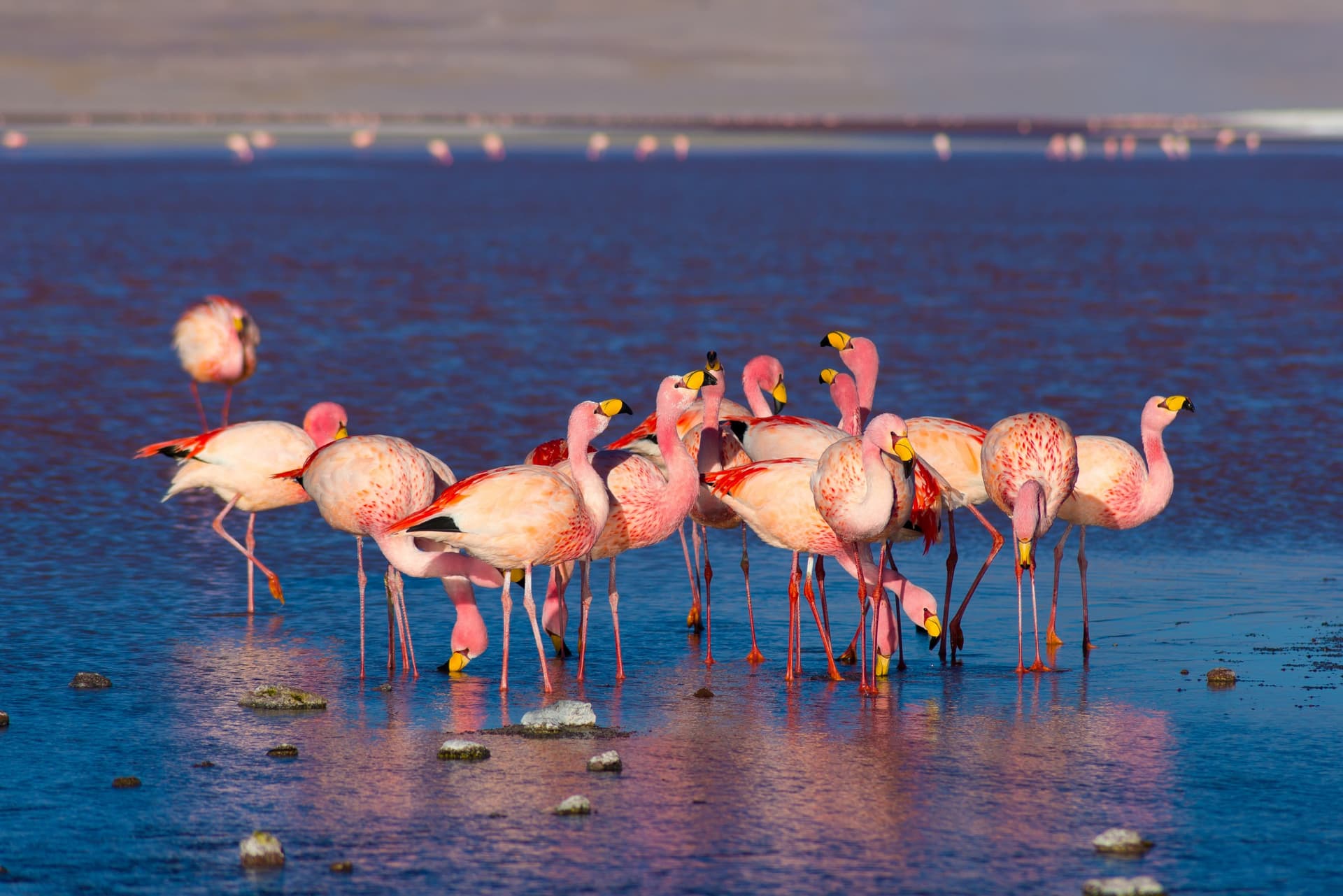
James's flamingo (90 cm): equipped with a bright yellow beak with a black tip, and brick-red legs.
Located near Chile's Los Flamencos national reserve, the Atacama salt flat is a magical place to observe wading birds. To facilitate border crossing, opt for an organized excursion, such as The Route of Deserts Bolivie-Chile!
Frequently asked questions
The dry season, from May to October, is the ideal period to observe pink flamingos in Bolivie. The weather is sunnier and visiting conditions are better. To witness courtship displays and spectacular flights, favor the warm seasons. Avoid the months of January to March, marked by heavy rainfall.
Three species of pink flamingos are observable in the region: the Chilean flamingo (130 to 110 cm), recognizable by its grey legs and pink joints; the Andean flamingo (110 cm), the only one with yellow legs and feet; and James's flamingo (90 cm), equipped with a bright yellow beak with a black tip and brick-red legs.
Laguna Colorada is accessible via 4x4 excursions organized from Uyuni or Tupiza. It is located within the Eduardo Avaroa national reserve, in South Lípez. It is strongly recommended to use a specialized agency, particularly to facilitate access to high-altitude tracks (over 4,000 m).
Pink flamingos owe their color to their diet: they consume crustaceans and a red alga called Dunaliella salina, which thrives in areas with high salinity. At birth, flamingos are white or grey and only take on their pink hue in adulthood, depending on the intensity of this diet.
Laguna Colorada owes its red color to the high concentration of Dunaliella salina in its waters. Laguna Verde, located 90 km further south and at over 4,000 meters altitude, gets its green hue from the presence of copper, lead carbonate, sulfur and diatoms. Both lagoons harbor colonies of pink flamingos.